

A personal goal is an internal compass, pointing you toward a future you intentionally want to build. It’s the difference between drifting along and navigating your life with purpose, ensuring your daily actions add up to something meaningful.
What a Personal Goal Really Means
Think of a personal goal as a specific destination you plug into your life’s GPS. Without it, you're just driving. With it, every turn becomes a deliberate move toward where you want to end up.
These goals are tied directly to what you care about—your values, your ambitions, your curiosities. They can be about your career, your health, a creative project, or personal growth. They give you the ‘what’—the outcome you’re aiming for.
But a destination alone is not enough. You also need the ‘how’, and that’s where daily habits come in. A goal like "get in better shape" remains a vague wish until you support it with consistent, small actions.
A personal goal provides the direction; a system of daily habits provides the momentum. One without the other rarely leads to lasting change.
This disconnect is why most people struggle with consistency. It's why research shows that a staggering 80% of resolutions fail within a few months. The ambition is there, but the daily structure to make it happen is missing.
So, let's break a true personal goal down into its two essential parts. This isn't just theory; it's the practical foundation for making real progress.
To truly understand what a personal goal is, you must see it as the first half of a two-part equation:
- The Vision: Your clear, desired outcome (e.g., run a 5k, learn how to code).
- The System: The small, repeatable habits that make the vision possible (e.g., run three times a week, study for 20 minutes every day).
To make this crystal clear, here’s a quick breakdown of what separates a fuzzy idea from a real, actionable goal.
Key Components of a True Personal Goal
This table gives you a quick summary of the essential elements that define a personal goal, helping you understand the concept at a glance.
| Component | Why It Matters |
|---|---|
| Personal Connection | It must mean something to you, not just be something you think you should want. |
| Clear Vision | You need to know what "done" looks like. It’s a specific destination, not a general direction. |
| Actionable System | It must be breakable into small, daily or weekly actions (habits). |
| Intentionality | It’s something you consciously choose to pursue, not something you just fall into. |
When you combine the vision with the system, you turn an overwhelming ambition into a series of manageable steps. This simple shift is the key to building a practical plan you can actually stick with.
Why Setting Personal Goals Matters
Setting a personal goal does more than just fill up your to-do list; it fundamentally changes your focus and drive. Without a clear target, you constantly burn mental energy deciding what to do next. This leads to decision fatigue, distractions, and procrastination.
A well-defined goal acts like a filter. It helps you instantly distinguish between what truly matters and what’s just noise. That mental clarity builds momentum, making you feel unstoppable and boosting your overall life outcomes, from energy and health to productivity.
The Science of Specificity and Motivation
Your brain is wired to respond to specifics. Vague ideas like “get healthier” are easy to ignore. But a concrete goal like “walk for 30 minutes every morning” gives your mind a clear command to follow.
This isn’t motivational fluff; it’s backed by decades of research. Goal Setting Theory found that specific, challenging goals lead to higher performance. When you add regular feedback—like the personalized insights from a habit tracker—performance improves even more. This clarity and tracking are incredibly powerful.
This process gives you a much stronger sense of purpose. Every small action feels meaningful because you know it’s connected to a bigger picture you consciously chose.
Goals provide the direction that prevents your daily efforts from feeling random or wasted. They are the ‘why’ that fuels your daily ‘how,’ transforming routine tasks into meaningful progress.
That sense of purpose is a powerful antidote to the consistency problem so many people face. It shores up your internal drive and is a huge part of understanding what is willpower and how to build more of it.
From Ambition to Action
Ultimately, setting personal goals is the first real step toward lasting change. It moves you from a passive "I wish" mindset into active participation in your own life. It forces you to get honest about what you want and then build a tangible roadmap to get there.
This structure turns a huge, intimidating ambition into a series of small, manageable steps. Instead of feeling overwhelmed by the journey, you can focus on the single step right in front of you—a core principle for building consistency with an app like Tracka.
Personal Goal Examples for Every Part of Your Life
Let's make the idea of a "personal goal" less abstract and more real. We all have vague wishes like “I want to be healthier” or “I need to get better with money.” Those are fine starting points, but they aren't goals. They lack the specificity needed to drive action.
A real goal is a destination, not a dream. You wouldn't tell your GPS to just “drive west.” You’d plug in an exact address. Personal goals do the same for your life—they give your effort a clear target.
Here are practical examples from different areas of life. Notice how each one can be broken down into small, repeatable actions. These are the kinds of daily habits you can build and monitor with a tool like Tracka to see if you’re making real, consistent progress.
Career and Professional Growth
These goals are about building skills, advancing your career, or finding more meaning in your work. They connect the daily grind to a bigger picture of where you want to go.
-
Goal: Master a new data analytics software to lead a project within six months.
-
Trackable Habits: Carve out 30 minutes every weekday for online tutorials; apply one new technique to a real work task each week.
-
Goal: Build my professional network by connecting with 20 new people in my industry this quarter.
-
Trackable Habits: Attend one virtual or in-person networking event per month; send two personalized connection requests on LinkedIn each week.
Health and Wellbeing
These goals turn fuzzy desires for better wellness into concrete routines. This is foundational—when your health is on track, it fuels better energy, focus, and performance everywhere else.
A goal like 'complete a 10k run in six months' isn’t just about fitness. It’s a commitment to the habits of training three times a week, prioritizing sleep for recovery, and fueling your body properly—each a small, trackable win.
- Goal: Get 7-8 hours of quality sleep per night to stop feeling drained and unfocused.
- Trackable Habits: Set a "no screens" rule for the hour before bed; stick to a 10-minute wind-down routine (like reading a physical book or journaling).
Financial Freedom
Financial goals are about swapping anxiety for control. They take the vague stress about money and turn it into a clear, actionable plan for managing it.
- Goal: Pay off a high-interest credit card in the next 12 months.
- Trackable Habits: Automate one extra payment each month; do a weekly spending review to find one small thing to cut back on.
Connecting Your Goals to Daily Habits
This is where the rubber meets the road—and where most people get stuck. You have an exciting personal goal, but the journey from here to there looks long and intimidating. That disconnect is exactly why a staggering 80% of resolutions get abandoned.
Let's be blunt: a goal without a system of daily habits is just a wish.
Think of your goal as the destination and your daily habits as the engine. The goal tells you where you’re going, but the habits are how you actually get there. They’re the small, repeatable actions that turn a lofty dream into something you do, day in and day out.
This is precisely the gap a tool like Tracka is built to fill. It’s designed to connect your big-picture vision to the tiny, consistent steps that make it a reality.
From Ambition to Actionable Steps
Instead of getting paralyzed by the sheer size of a goal, work backward and break it down into small, trackable habits. This simple move shifts your focus from the distant outcome to the immediate, controllable action you can take today.
It’s a powerful reframe.
-
Big Goal: "Write a book."
-
Tracka Habits: Write 500 words daily; read for 30 minutes.
-
Big Goal: "Improve my mental health."
-
Tracka Habits: Meditate for 10 minutes; journal one page before bed.
This isn’t just about making a to-do list; it's about building a support structure for your ambition.
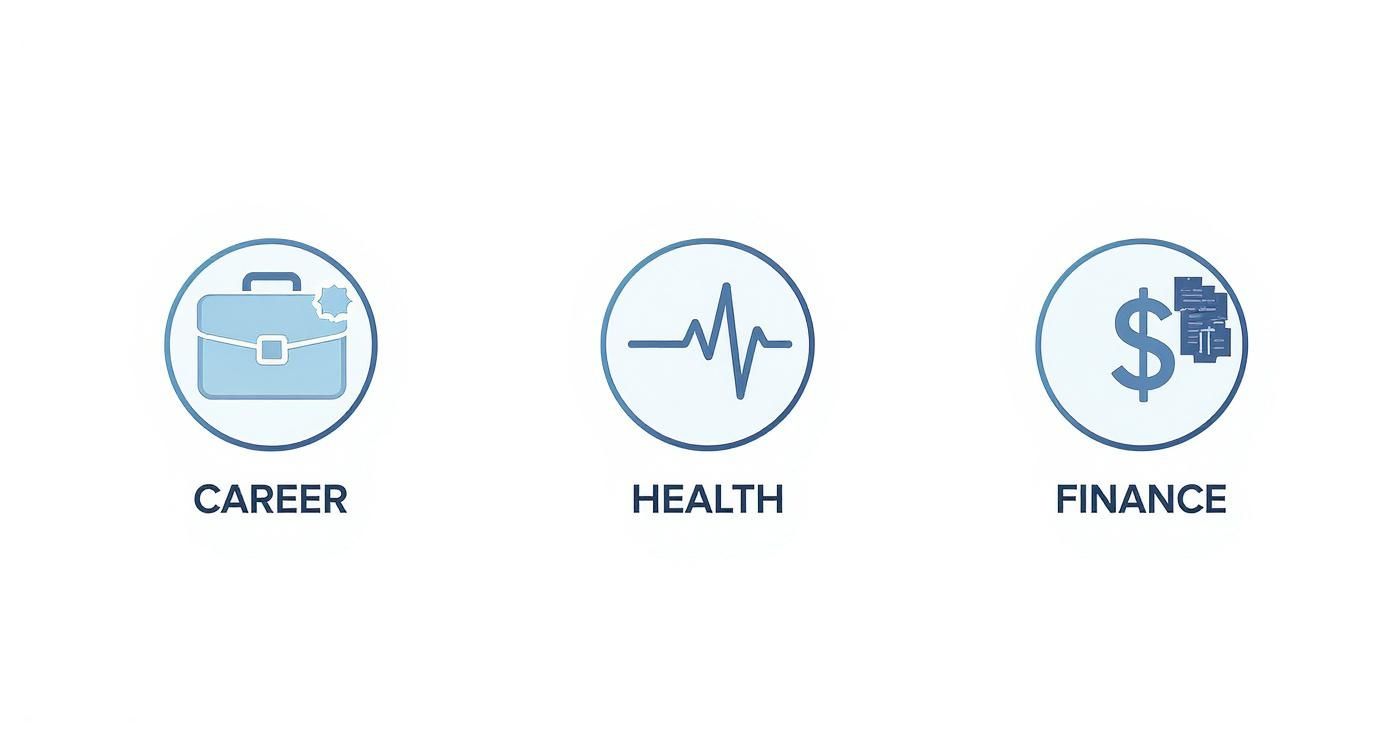
As you can see, major life goals—whether in your career, health, or finances—are all propped up by a foundation of consistent daily actions.
The simple act of writing this stuff down has a massive impact. Research shows that people who write down their goals and share their progress have a significantly higher success rate than those who don’t. You can discover more insights about goal achievement statistics to see just how powerful this practice is.
Your system of habits is far more important than your initial motivation. Motivation is fickle and fades, but a well-designed system will carry you forward even on the days you don't feel like it.
By tracking these small behaviors, you build momentum. Each time you check off a task in an app like Tracka, you get a small hit of satisfaction. That reward reinforces the behavior, making it easier to do again tomorrow. If you're looking for inspiration, check out our guide on some life-changing habits to track in your daily routine.
How to Set Goals You Actually Achieve
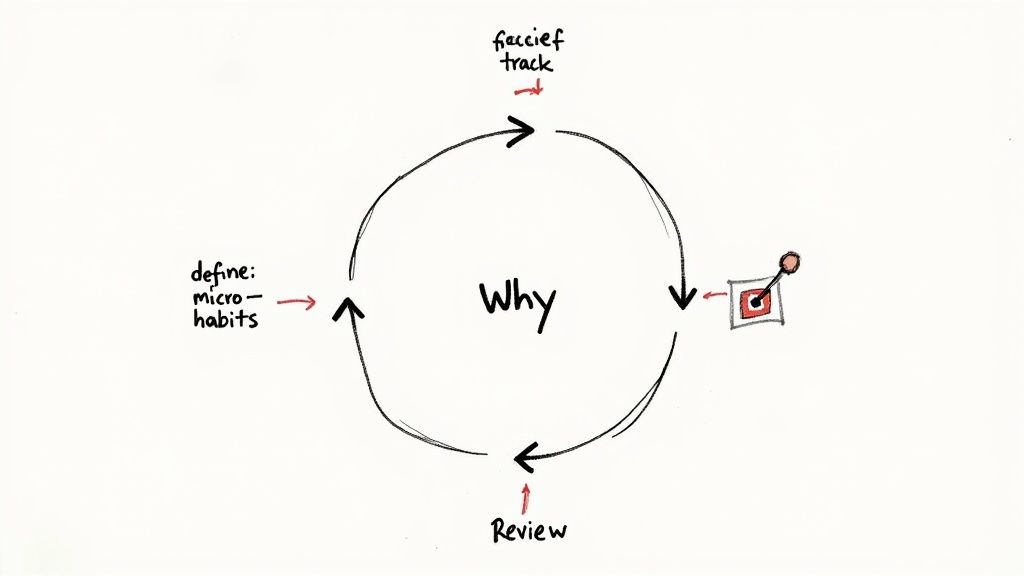
Knowing what a personal goal is and why you should have one is a great start. But turning that idea into something real requires a simple, practical framework. Forget complex theories. This is about moving from a vague ambition to daily actions you can stick with.
Start With Your Why
Every goal that sticks is powered by a deeper motivation. Before getting lost in the "what," anchor yourself in your "why." Why do you really want to run a 10k? Is it for your health? For the feeling of crossing the finish line? Or to be part of a running community?
When you tie a goal to something you genuinely care about, it provides powerful intrinsic motivation. That's what will get you moving on a morning when your willpower is low. It makes the daily grind feel less like a chore and more like a choice you’re proud to make.
Define Your Destination Clearly
Vague goals are where progress goes to die. Fuzzy wishes like "get in shape" or "be more productive" are impossible to act on because they don't give your brain a clear target.
You have to translate that wish into a specific, measurable outcome.
Instead of “get healthy,” make it “walk for 30 minutes, five days a week, and drink two liters of water daily.” That clarity removes the guesswork. At the end of the day, you know whether you hit the mark or not.
Break It Down Into Micro-Habits
The biggest goals aren't achieved in giant leaps. They're built one tiny, consistent step at a time. Once you know your destination, break the journey down into small, repeatable behaviors. These are the micro-habits that become the bedrock of your new routine.
A goal like “learn a new language” sounds massive. But a micro-habit like “complete one Duolingo lesson every morning while my coffee brews” feels completely doable. It's a small, consistent action that, repeated over time, leads to fluency. It also helps to understand how long it takes to form a habit so you can set realistic expectations.
To help you get started, here’s a quick look at how you can transform those fuzzy aspirations into concrete goals and trackable daily actions.
Turning Vague Aspirations into Actionable Goals
| Vague Aspiration | Specific Personal Goal | Trackable Daily Habit |
|---|---|---|
| "Read more books" | "Read 12 books this year" | "Read for 15 minutes every night before bed" |
| "Get out of debt" | "Pay off my $5,000 credit card in 10 months" | "Transfer an extra $125 to my credit card every Friday" |
| "Learn to meditate" | "Meditate three times per week for a month" | "Use a 5-minute guided meditation after breakfast" |
| "Be more present" | "Have a screen-free dinner with my family on weeknights" | "Put my phone in a drawer from 6 PM to 7 PM" |
See the pattern? The magic happens when you connect a big-picture goal to a tiny action you can perform today.
Use a Tracking System
If consistency is the engine of achievement, then a tracking system is your dashboard. It tells you if the engine is running. This is where an app like Tracka becomes your best accountability partner.
Logging your micro-habits each day does two critical things: it gives you honest feedback and creates a powerful sense of momentum. Unlike generic apps, Tracka provides personalized, AI-powered insights that show trends and help you understand your patterns. Every checkmark is a small win that reinforces your commitment and makes you want to keep the streak going.
Review and Adjust as You Go
Finally, remember that your goals aren't carved in stone. Life happens. Priorities shift, and what seemed important three months ago might not be your focus today.
Set aside time every month to check in. Are your daily habits moving you closer to your goal? Do you need to change your approach? This process of reviewing and adjusting ensures your goals stay relevant, realistic, and genuinely aligned with the life you want to live.
Your Goal Setting Questions Answered
When you start getting serious about personal goals, questions always pop up. It’s normal to wonder if you’re doing it right, what to do when you get stuck, or how to handle having too many ambitions at once.
Let’s get straightforward answers to the most common queries.
What If I Have Too Many Goals?
It’s great to be ambitious, but trying to juggle everything at once is a classic recipe for burnout. If you feel pulled in a dozen directions, hit pause and prioritize.
Ask yourself one simple question: "Which one of these goals, if achieved, would make the biggest positive difference in my life right now?"
Whatever your answer is, start there. You can park the other ideas for later. Trying to build five new habits at the same time usually means you end up with zero. Focus on locking in one or two core habits in an app like Tracka until they feel automatic. Then, and only then, bring in the next one.
How Long Should a Personal Goal Take?
There’s no magic timeline. A goal can be short-term, like finishing a project in 30 days, or long-term, like saving for a down payment over five years. The timeframe is less important than the system you build to get there.
Your focus should be on your daily and weekly actions. Instead of getting overwhelmed by a goal that’s a year away, just concentrate on winning today. Did you do your 15-minute walk? Did you read for 20 minutes? Those small, consistent wins make any timeline feel achievable.
What Do I Do When I Fail or Lose Motivation?
First, let’s reframe this. Setbacks aren't failures—they’re feedback. Everyone misses a day. Everyone loses steam. The people who successfully build new habits have plenty of lapses. The only difference is they get back on track fast.
Your success isn’t defined by a perfect streak; it’s defined by how quickly you restart after a stumble. Don't let one off day spiral into an off week.
When motivation dips, lean on your system, not your feelings. This is where tracking becomes so powerful. Seeing your progress laid out visually in Tracka is a potent reminder of how far you’ve come. Plus, tapping into a community for social accountability can provide the nudge you need to keep going. The point is to rely on your system, not on fleeting motivation.
Ready to stop wishing and start doing? Tracka is the simple, supportive app designed to help you turn your biggest personal goals into achievable daily habits. Build consistency, gain momentum, and get the personalized insights you need to make progress that lasts. Start tracking your goals with Tracka today.


