

What exactly is a structured day planner? It’s a system for deliberately organizing your time, tasks, and priorities to sharpen your focus and achieve your goals. It goes beyond a simple to-do list by incorporating time blocking, task prioritization, and integrated routines to cut down on mental clutter and give you a clear, actionable roadmap for your day.
Why a Structured Day Planner Is Your Secret Weapon for Focus
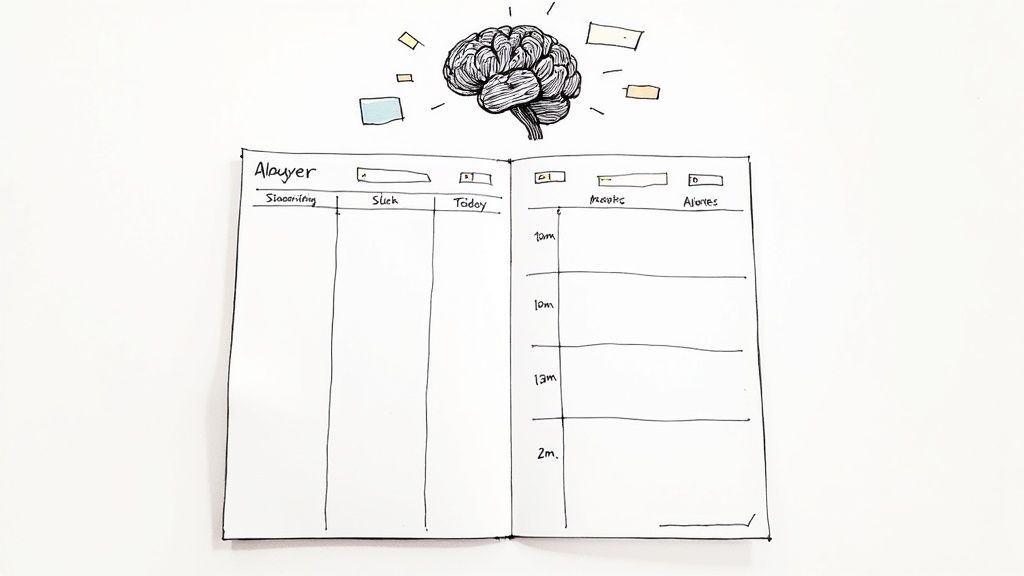
In a world overflowing with notifications and competing demands, deep focus can feel like an impossible goal. Distractions drain your mental energy, making it tough to gain momentum on what actually matters. This is a huge problem—most people struggle with consistency, and research shows that a staggering 80% of resolutions are abandoned. This is where moving from a basic checklist to a fully structured day planner becomes a game-changer.
This isn't about creating a rigid, minute-by-minute schedule. It’s about externalizing your entire plan. By getting your intentions into a digital tool or onto paper, you free up precious mental bandwidth that would otherwise be wasted remembering tasks, juggling priorities, and figuring out what to do next.
From Overwhelm to Intentional Action
For busy professionals and anyone managing ADHD, this method directly supports the brain's critical executive functions. It provides a clear framework that helps with:
- Prioritization: Making it easy to see the difference between high-impact work and low-value distractions.
- Time Management: Allocating realistic blocks of time for specific tasks so you don't overcommit.
- Reduced Decision Fatigue: Knowing exactly what you should be working on at any given moment.
It’s no surprise the demand for these tools is growing. The global market for diaries and planners was valued at around USD 1.2 billion in 2025 and is expected to hit an estimated USD 1.74 billion by 2035. This trend points to a collective shift toward more intentional and effective productivity systems.
A structured planner turns abstract goals into a concrete daily process. It’s the bridge between knowing what you need to do and actually doing it, creating a system that builds consistency one day at a time.
Ultimately, this system cuts down on daily overwhelm and builds the foundation for good working habits. When your day is mapped out, you can channel your energy into execution rather than constant, draining re-planning. This intentionality is the first and most critical step toward consistently hitting your goals. You can learn more about building effective routines in our guide to good working habits.
Building Your Priority-Setting Framework
Before your planner can be anything more than a glorified to-do list, you have to know what actually matters. A perfectly structured day filled with low-impact tasks is just a prettier way to stay busy without getting anywhere. This is where you build the foundation, making sure every minute scheduled moves the needle on your goals.
It all starts with separating the urgent from the important. This is a classic trap: we spend our days reacting to urgent but unimportant tasks—like answering every email the second it lands—while our real goals get shoved to the side. It's a frustrating cycle of busyness that burns you out but produces very little of substance.
A simple, evidence-based tool for cutting through this noise is the Eisenhower Matrix. It forces you to sort your tasks into four buckets:
- Urgent & Important: Do these right now. (Think: a project deadline that's today.)
- Not Urgent & Important: Schedule these. This is where real progress happens. (Think: long-term strategic planning.)
- Urgent & Not Important: Delegate these if you can. (Think: routine admin work that feels pressing but doesn't require you.)
- Not Urgent & Not Important: Ditch these entirely. (Think: mindless scrolling.)
Just sorting your list this way brings instant clarity to where your focus should be.
Identifying Your Big Rocks
Another fantastic way to think about this is by identifying your "Big Rocks." These are your 1-3 most critical goals for the week or month. Imagine filling a jar: you have to put the big rocks in first, or they'll never fit. All the smaller tasks—the pebbles and sand—can only fill the space around them.
For a founder, a Big Rock might be "Finalize the investor pitch deck." For a student, it could be "Complete research for the final paper." The pebbles and sand are all the little things, like responding to messages or running errands. When you isolate your Big Rocks, you guarantee they get dedicated, protected time in your planner instead of being crowded out.
The goal is to design a day that reflects your actual objectives, not just your immediate obligations. This shift from reactive to proactive planning is the core of an effective structured day planner.
This isn't just a nice idea; it has a real impact. Research shows that toggling between important work and minor distractions can slash your productivity by as much as 40%. When you set clear priorities first, you create the conditions needed for deep, focused work. Once you know what's important, you can start building a schedule that actually protects that focus.
Here's a quick comparison to help you choose the best framework for your planning style.
Comparing Two Popular Priority-Setting Methods
| Method | Best For | Key Benefit |
|---|---|---|
| Eisenhower Matrix | Individuals who feel overwhelmed by a constant influx of requests and tasks. | Quickly separates high-value activities from time-wasting distractions, reducing decision fatigue. |
| Big Rocks | People focused on achieving a few major, long-term goals over a specific period. | Guarantees that your most critical projects receive dedicated, protected time in your schedule. |
Whether you go with the matrix or the rocks, the point is the same: be intentional. Taking just a few minutes to define your priorities transforms your planner from a list of chores into a roadmap for achieving what you actually want.
Mastering Time Blocking and Micro Routines
You've got your priorities straight. Now it's time to execute. This is where you move from knowing what’s important to building a day where you actually do what's important. To make your structured planner work, you need to master two key concepts: time blocking and micro routines.
Time blocking is simply assigning a job to every minute of your day. Instead of staring at a massive, overwhelming to-do list and wondering where to start, you slot tasks directly into your calendar. This simple shift is powerful. It kills the urge to multitask and forces you to be realistic about how much you can actually get done.
Designing Your Day Block by Block
Think of your day as a mosaic. You’re not just scheduling work; you're creating a balanced mix of different types of effort and rest.
A solid day might have blocks for things like:
- Deep Work: A 90-minute, phone-on-silent block dedicated to your single most important task.
- Shallow Work: A 45-minute sprint to clear out emails, return calls, and handle quick admin stuff.
- Creative Time: An unstructured block for brainstorming, noodling on a problem, or just thinking.
- Breaks & Buffers: Real, scheduled time for lunch, a quick walk, or the travel time between meetings.
This approach works better with how our brains are wired. We’re built for focused sprints, not a constant, low-grade hum of engagement. It’s no wonder the diaries and planners industry hit a global value of USD 10 billion in 2023 and is expected to climb to USD 15.4 billion by 2032. People are actively seeking tools like daily planners with hourly layouts that are perfect for this style of planning. You can dig into more of the data behind this trend in the full market analysis on DataIntelo.com.
This visual captures the first part of the process—taking your big priorities, breaking them down, and getting them ready to schedule.
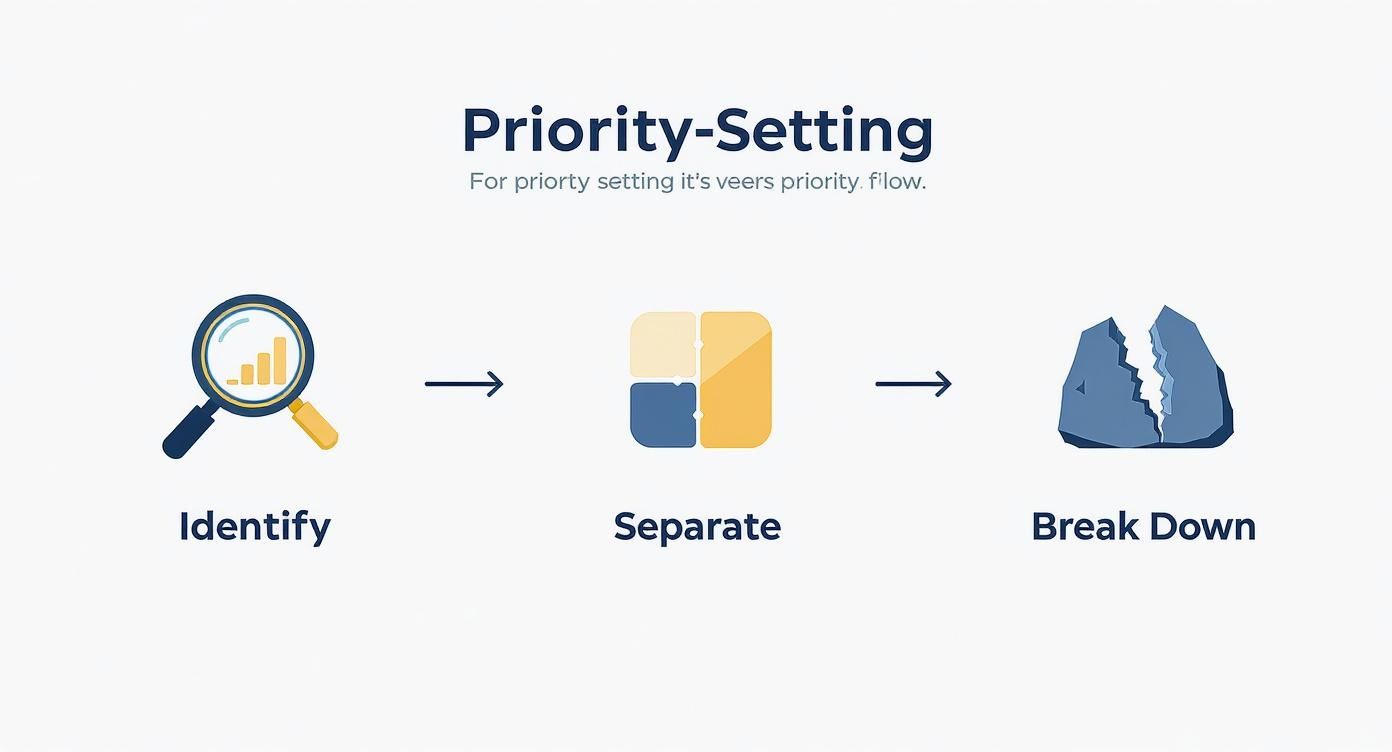
It shows a clear path from your high-level goals down to the concrete tasks that fill your day, which is the essential groundwork for effective time blocking.
The Power of Micro Routines
While time blocks give your day structure, micro routines give it momentum. These are tiny, repeatable sequences of actions that act like on-ramps and off-ramps for your brain. They signal that it’s time to start—or stop—a certain activity, dramatically reducing the friction of switching gears.
For instance, a working parent could use a 10-minute "morning kickoff" routine before the kids wake up: review the planner, make coffee, and do a few quick stretches. It’s a small ritual that sets a calm, intentional tone for the whole day.
Another game-changer is the "end-of-day shutdown." A remote developer might spend the last 15 minutes of their workday doing this:
- Check off completed tasks.
- Move any unfinished items to tomorrow's plan.
- Tidy up their digital desktop and physical workspace.
This creates a clean break, preventing work from bleeding into personal time and cutting down on that "what did I forget?" anxiety the next morning.
The secret to a structured day planner that you'll actually stick with is building in flexibility. Life happens. By sprinkling 15-minute buffer blocks throughout your day, you create a resilient schedule that can absorb an unexpected call or a task that runs long without throwing your entire plan off the rails.
Why Your Planner Needs a Habit Tracking App
A great plan can organize your day, but it's your habits that build your life. Your structured day planner is brilliant for managing tasks, but it often misses something crucial: the small, consistent actions that fuel long-term growth. This is where you bridge the gap between just getting things done and truly building a better lifestyle.
Pairing your planner with a dedicated habit tracking app creates a powerful system. Your planner tells you what to do and when, while a tool like Tracka helps you build the consistency muscle to actually follow through, day in and day out. This combination is how better habits lead to better life outcomes—more energy, focus, and health.
From Scheduled Task to Ingrained Habit
The first step is to literally schedule "habit blocks" in your planner. Think of these as non-negotiable appointments with yourself that directly serve your bigger goals.
For instance, a vague goal like "be healthier" doesn't get you very far. Instead, your planner should have concrete, scheduled entries:
- 7:30 AM – 7:45 AM: 15-minute morning walk
- 12:30 PM – 12:45 PM: Mindful eating (no screens during lunch)
- 9:30 PM – 9:50 PM: Read 20 pages of a book
Once an action is on the schedule, you use Tracka to log whether you did it. This quick check-in is more than just record-keeping; it sparks a powerful psychological feedback loop. Each log is a small win, reinforcing the behavior and making you more likely to repeat it. This is vital when you're starting out—that 80% failure rate for resolutions often comes down to people not feeling like they're making any real progress.
A planner schedules the intention. A habit tracker builds the identity. Watching your streaks grow in an app like Tracka slowly transforms you from someone who plans to exercise into someone who is an exerciser.
Unlocking Deeper Insights Your Planner Can't See
Here’s where the real magic happens. A paper planner is static; it can't spot the hidden connections in your behavior. Unlike generic habit apps, Tracka’s AI-powered insights can. The app analyzes your logged habits and journal entries to surface patterns you’d never catch on your own.
You might discover that on days you take that 15-minute morning walk, your self-reported focus in the afternoon is 30% higher. Or maybe you'll see a clear link between skipping your end-of-day reflection and feeling more stressed the next morning.
These personalized insights are gold. They give you concrete, evidence-based motivation to stick with your routines, turning abstract benefits into measurable results you can actually see. To get a feel for how different tools approach this, you can check out our breakdown of the best habit tracking apps.
By combining your structured day planner with a smart tool like Tracka, you create a complete system for personal growth. Your planner provides the daily roadmap, while Tracka delivers the accountability, personalized insights, and motivational fuel you need to turn daily actions into life-changing habits.
Using an End-of-Day Reflection to Improve Your System
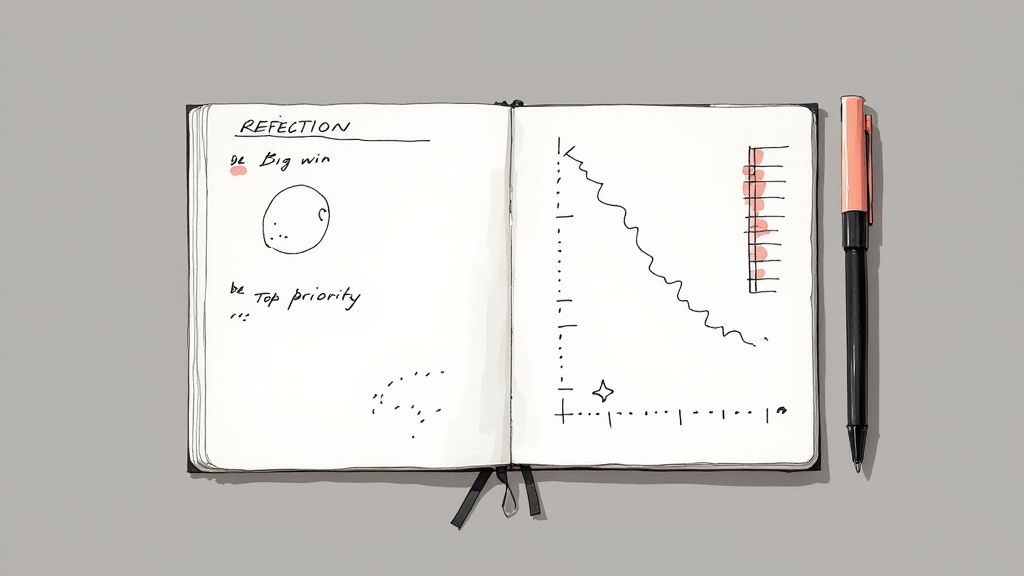
Here’s a hard truth: your planner is a living document, not a static, one-time setup. The difference between a planner that gathers dust and one that actually sharpens your focus comes down to a simple, consistent habit—an end-of-day reflection.
This isn't about harsh self-critique. It’s a powerful 5-minute routine that creates a crucial feedback loop, helping you understand what’s actually working, not just what you planned to do. By taking a moment to process the day, you can spot patterns, celebrate small wins, and make intelligent adjustments for tomorrow.
This is the process that turns your planner from a simple scheduling tool into a dynamic system for personal growth.
A Simple 5-Minute Reflection Routine
To make this stick, block out five minutes in your planner right before you shut down for the day. This protects the time and turns the reflection itself into a keystone habit. The goal here is honesty and brevity, not writing an essay.
Just ask yourself three simple questions:
- What was my biggest win today? Maybe you finished a major task, navigated a tough conversation, or simply stuck to your plan. Acknowledging wins builds momentum.
- Where did I get distracted or lose focus? Was it a specific app, an unexpected interruption, or just an energy dip? Naming the source is the first step to mitigating it tomorrow.
- What is my single top priority for tomorrow? Based on today’s progress, define the one task that will make the biggest impact. This gives you immediate clarity when you start your morning.
This brief reflection is the engine of continuous improvement. It ensures your planning system evolves with your goals and daily realities, preventing the common problem of a plan becoming outdated within a week.
Logging Insights with Tracka for Long-Term Growth
While a physical planner is fantastic for the daily grind, capturing these reflections digitally creates a searchable, long-term record of your progress. This is where pairing your planner with a tool like Tracka becomes incredibly effective.
You can use Tracka’s journaling feature to quickly log your answers to the reflection prompts each day. Over time, these entries build a powerful database of your personal productivity.
This is where things get interesting. Tracka’s AI can then analyze this data to surface deeper insights. For instance, it might connect your notes about distraction to a specific habit you skipped, revealing a pattern you would never have noticed on your own. Your daily thoughts are turned into actionable, data-driven advice.
To learn more about building this practice, explore our guide on how to start journaling.
This combination—a structured day planner for daily execution and a digital tool for reflective insight—creates a truly powerful system. You're not just managing your days; you're learning from them, ensuring your methods get smarter and more effective over time.
Common Questions About Structured Day Planners
Even with the best planner in hand, life happens. Questions are going to pop up, and some days will feel like you're fighting an uphill battle. That’s a normal part of building any new system. Let's tackle some of the most common challenges people run into.
One of the biggest anxieties is what to do when your perfectly planned day gets completely derailed. A last-minute meeting, a family emergency, or a task that balloons to twice its estimated time can make you want to just toss the whole planner in the trash.
When disruptions hit, the key is to treat your planner like a guide, not a straightjacket. Don't abandon it. Take a breath and do a quick "triage." Look at what's left and ask yourself: what is the one thing I absolutely must get done today? Focus all your remaining energy there. Everything else can be intentionally rescheduled for tomorrow. This simple move prevents one setback from wrecking your entire week.
Digital Versus Physical Planners
The debate over digital versus physical planners comes up all the time. Honestly, there's no single right answer. The best tool is the one you’ll actually use, and that comes down to your personal style and workflow.
- Physical Planners: There's a certain magic to putting pen to paper. The physical act of writing can actually boost memory and commitment. Plus, a paper planner is blissfully free of notifications and the temptation of just one more browser tab.
- Digital Planners: The big win here is flexibility. You can drag and drop tasks, set automated reminders, and sync everything with your calendar. They're always on you, accessible from your phone or laptop.
Many people land on a hybrid approach. They might use a physical notebook for big-picture thinking and daily reflection, but lean on a digital calendar for the nitty-gritty of appointments and reminders. The market reflects this growing demand. Reports show the global diaries and planners sector was valued at USD 3.27 billion in 2024 and is expected to hit USD 5 billion by 2035. You can dig into the numbers in the full market report.
Is It Really Worth the Time to Plan Every Single Day?
It definitely feels a bit backward to spend time planning when you already feel like you have no time. But this small, upfront investment pays off in a huge way. A mere 10-15 minutes of planning—either in the morning or the evening before—saves you hours of wasted time, decision fatigue, and scattered work later.
Think of it like mapping out a road trip before you start driving. A few minutes with the map ensures you don't spend hours lost on side roads. Your structured day planner is your daily roadmap.
This consistent habit is what separates people who feel in control of their day from those who feel their day controls them. It’s a tiny action that has a massive ripple effect on your focus, your sense of calm, and your ability to achieve real-life impact.
A structured day planner gives you the framework, but turning those plans into reality is where the real work begins. Tracka is built to bridge that gap, helping you turn planned actions into automatic habits. Use our AI-driven insights, habit tracking, and community features to build the routines that matter, whether you're focused on fitness, nutrition, productivity, or personal growth. Start turning your plans into actual progress by visiting https://tracka.ai today.


