

To stop procrastinating on homework, you have to get one thing straight: it's an emotional reaction, not a character flaw. That pit in your stomach isn't laziness. The cycle is driven by feelings like anxiety, perfectionism, or just being totally overwhelmed. Breaking free means shifting from self-criticism to building practical, supportive systems that actually work.
Understanding Why You Procrastinate on Homework
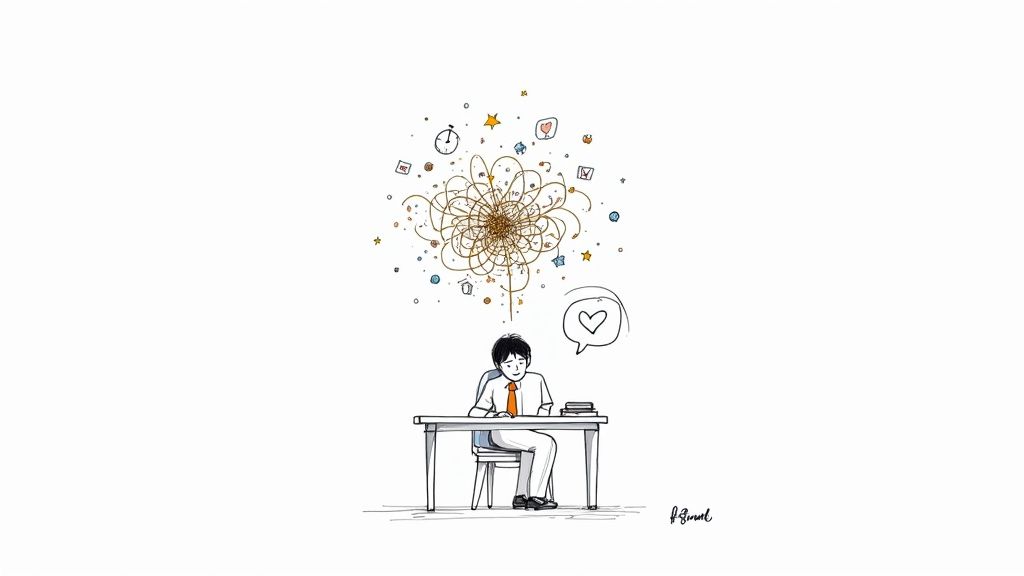
That feeling of dread when you stare at a big assignment? It’s your brain trying to shield you from discomfort. At its core, procrastination is an emotional regulation problem. When a task triggers negative feelings, your mind desperately seeks a temporary mood boost by switching to something more pleasant—like scrolling social media or watching another YouTube video.
This little avoidance trick works beautifully in the short term, giving you a quick hit of relief. But it creates a powerful and destructive feedback loop where delaying tasks becomes a habit. Most people struggle with this kind of consistency; research shows a staggering 80% of people abandon their New Year's resolutions, often for the same reasons. The more you put off your homework, the more anxiety builds, making it even harder to start the next time.
The Real Triggers Behind Homework Avoidance
The reasons you put things off are almost always tied to specific, underlying fears or feelings. Figuring out what those triggers are is the first step toward building a strategy that actually helps you get unstuck.
Some of the most common emotional triggers include:
- Fear of Failure: The pressure to get a perfect grade can be absolutely paralyzing. If you’re worried that your work won't be good enough, it can feel safer not to start at all.
- Feeling Overwhelmed: A ten-page paper or a multi-step project can feel like an impossible mountain to climb. The sheer size of the task makes even thinking about it exhausting.
- Perfectionism: This is the toxic belief that your work must be flawless from the get-go. This impossibly high standard makes starting incredibly difficult because a first draft will never meet those unrealistic expectations.
- Lack of Clarity: When you're not even sure how to start or what the instructions mean, it’s natural to avoid the task just to sidestep all that confusion and frustration.
The Global Scope of Student Procrastination
If you’re struggling with this, you are far from alone. Procrastination is a massive issue for students everywhere, impacting everything from grades to mental wellbeing.
Studies show that 80% to 95% of college students procrastinate on their coursework, and a staggering 86% of high school students admit to delaying assignments. This habit adds up, with the average person losing nearly 1.6 hours per day to procrastination—that’s about 55 days a year. You can learn more about the academic impact of procrastination and find ways to overcome it.
By shifting your mindset from "I am lazy" to "I am feeling overwhelmed," you can move from self-blame to problem-solving. This isn't about forcing yourself through willpower; it's about building a system that makes starting easier.
This is where a tool like Tracka becomes so helpful. It’s designed to make habit change achievable by helping you track small, manageable actions instead of fixating on the huge, intimidating final product. By logging tiny wins, you create positive momentum and start retraining your brain to associate homework with accomplishment, not anxiety.
Break Down Huge Assignments into Small Wins
That ten-page history paper on your to-do list doesn't just feel big; it feels impossible. When a task is that intimidating, our brains do a very predictable thing: they shut down. This sense of overwhelm is a classic trigger for procrastination, sending you anywhere but toward the work that matters.
The secret to getting started is to stop seeing it as one giant, terrifying mountain. Instead, you have to break it down into a series of small, almost trivial steps. It’s a mental trick that works surprisingly well, improving focus and making consistency achievable.
This process, sometimes called task decomposition, is all about transforming a vague monster of a task into a clear, actionable checklist. Each item on that list should be so small that it feels easy, almost silly not to do it—something you could knock out in 15-30 minutes, tops. You’re not trying to conquer the mountain in one go; you’re just taking a single, manageable step.
From Mountain to Molehills: A Practical Example
Let’s go back to that dreaded history paper. Instead of having "Write History Paper" looming over you, your new, much friendlier to-do list might look something like this:
- Find and save three primary source articles.
- Read just the introduction and conclusion of each source.
- Draft one single, messy thesis sentence. (It doesn't have to be good yet!)
- Create a simple bullet-point outline for the first paragraph.
- Write only the first two sentences of the intro.
See the difference? Each of these micro-tasks is specific, contained, and achievable. Completing just one gives you a small hit of accomplishment, which builds the psychological momentum you need to tackle the next one. This isn't just about getting work done; it's about retraining your brain to associate homework with progress, not pressure—a crucial step toward better academic outcomes.
The goal isn’t to finish the entire assignment in one sitting. The goal is to simply complete the very next, very small step. Momentum is built from a series of small wins, not one giant leap.
Tracking Your Progress to Build Consistency
Logging these small wins is a crucial part of making this stick. It provides a visual record of your effort, proving to yourself that you are making real progress, even on days when it doesn't feel like it. This is where using a tool like Tracka can make a huge difference.
Instead of just checking off a box on a piece of paper, you can create a specific habit in Tracka called "Complete Micro-Task" or "15-Min Study Block." Unlike generic habit apps, Tracka provides personalized, AI-powered insights that reveal trends in your productivity. This visual proof turns abstract effort into concrete achievement, making it easier to show up and tackle your homework day after day. You're no longer fighting procrastination with sheer willpower; you're building a reliable system for success.
Master Your Schedule with Proven Time Management
Once you’ve chopped your massive assignments into tiny, manageable pieces, the next big question is when you’ll actually do the work. A vague plan like "I'll study tonight" is pretty much an open invitation for procrastination to crash the party. To really stop procrastinating on homework, you have to get intentional with your time.
This is where proven time management techniques are a game-changer. They aren’t about cramming more work into your day. Far from it. They’re about creating a structure that kills decision fatigue and makes it almost effortless to just start. Instead of wasting mental energy wrestling with what to do next, your schedule makes the choice for you.
Implement the Pomodoro Technique
The Pomodoro Technique is a beautifully simple but powerful method for staying locked in. The whole idea is to work in short, intense bursts, which is perfect for brains that just can’t handle long, drawn-out study sessions.
Here’s the breakdown:
- Set a timer for 25 minutes and work on a single task with zero interruptions. No phone, no new tabs, nothing.
- When the timer rings, you’ve earned a 5-minute break. Get up, stretch, grab some water—do anything but work.
- After you’ve done four of these "Pomodoros," take a longer, more restorative break of 15-30 minutes.
This system works because a 25-minute sprint feels way less intimidating than a three-hour study marathon. It respects your brain's natural energy cycles, which helps prevent the exact kind of burnout that makes you want to avoid work in the first place, leading to more energy and reduced stress.
Schedule Your Success with Time Blocking
Another powerhouse strategy is time blocking. This is where you schedule your study sessions directly into your calendar, treating them like appointments you absolutely can't miss. Instead of a floating to-do list, you have a concrete, hour-by-hour plan for your day.
A time-blocked schedule might have a slot from 4:00 PM to 4:25 PM labeled "History Paper Outline" or two Pomodoro sessions from 7:00 PM to 7:55 PM dedicated to that "Math Problem Set." This completely removes the guesswork and analysis paralysis that so often leads to mindless scrolling. By giving every hour a job, you reclaim control over your time.
Procrastination thrives in ambiguity. When your schedule is clear and your tasks are defined, there’s simply less room for avoidance to creep in.
A tool like Tracka is perfect for this. You can log your "Pomodoro Sessions" or "Study Blocks" as a habit, and seeing your consistency build over time provides a seriously powerful visual reward. Plus, Tracka’s AI can analyze your data to reveal your personal productivity patterns—like the times of day you're sharpest—helping you optimize your schedule even further. For more ideas on organizing your day, check out our guide with other essential time management tips for students.
To help you decide which method might suit you best, I've put together a quick comparison of some popular techniques.
Time Management Technique Comparison
| Technique | Best For | How It Works | Pro-Tip |
|---|---|---|---|
| Pomodoro Technique | Short bursts of focused work; breaking up intimidating tasks. | Work for 25 mins, break for 5. Take a longer break after 4 cycles. | Use a physical timer to create a clear separation from your phone/computer. |
| Time Blocking | People who like a structured, predictable schedule. | Assign specific tasks to specific blocks of time in your calendar. | Schedule breaks and free time, too! This prevents burnout and makes the plan more realistic. |
| Eat the Frog | Tackling your most dreaded task first to build momentum. | Identify your most difficult task for the day and do it first thing. | Your "frog" should be a high-impact task. Getting it done makes the rest of the day feel easy. |
| The Ivy Lee Method | Prioritizing a small number of tasks for maximum focus. | At the end of each day, list the 6 most important tasks for tomorrow. Work on them in order. | Don't move to task #2 until #1 is done. This forces ruthless prioritization. |
Ultimately, the best technique is the one you'll actually stick with. Don't be afraid to experiment or even combine methods to create a system that works for your unique brain and workload.
This decision tree shows how breaking down a large task is the critical first step before you can even think about scheduling.
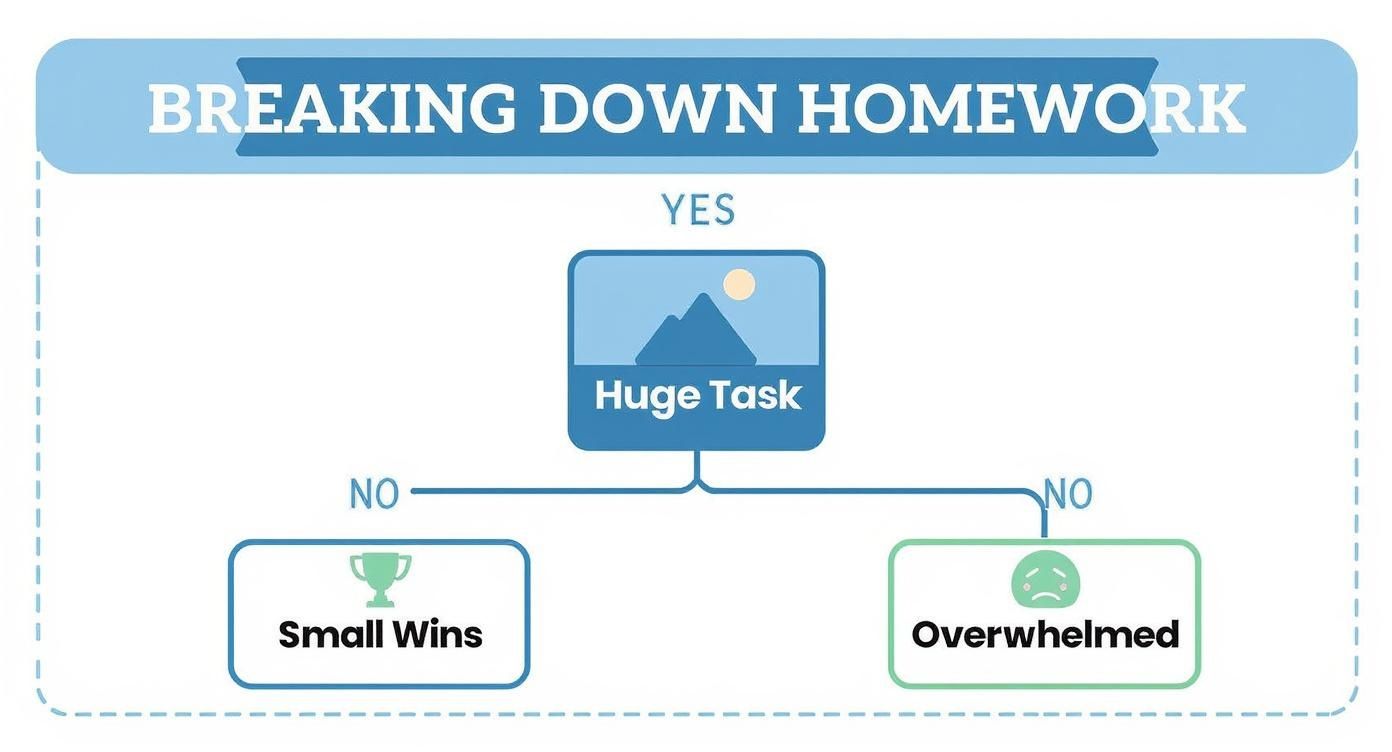
As the visual reinforces, trying to tackle a huge project head-on is a recipe for overwhelm. Breaking it into small wins is what creates a clear, actionable path to getting it done.
Design a Distraction-Free Study Environment
Your study space can be your biggest ally or your worst enemy. When you’re trying to beat procrastination, an environment overflowing with notifications, clutter, and tempting distractions is a battle you’ll lose before you even start.
The goal isn't just to remove distractions but to make doing your homework the path of least resistance. It's about flipping the script—add friction to your bad habits while making your study materials impossible to ignore. If your phone is within arm’s reach and your textbook is buried under a pile of laundry, procrastination has already won.
Taming Your Physical and Digital Spaces
First, let's tackle your physical space. Designate one spot—a desk, a corner of the kitchen table—as your dedicated study zone. Keep it clean, organized, and stocked only with what you need for the task at hand. This simple act of decluttering your environment helps declutter your mind.
Next up is your digital world, which is often the bigger beast to tame. That constant stream of notifications is the main culprit derailing your focus. A few strategic moves can put you back in control:
- Move Your Phone: Don’t just put it on silent. Move it to another room entirely. The physical distance creates a powerful psychological barrier against the impulse to just "check it for a second."
- Use Website Blockers: Install a browser extension to block your go-to distracting sites—social media, YouTube, Reddit—during your scheduled study blocks.
- Silence Notifications: Turn off all non-essential pop-ups and alerts on your computer. A single notification can completely shatter a productive focus session.
Technology's role in homework delays is a huge global issue, especially with the rise of remote learning. One study found that roughly 40% of students experience more sleep issues due to bedtime procrastination, which messes with both wellbeing and academic performance. And since 57% of online time is often wasted on distractions, actively managing your digital world isn't optional. You can read more about how technology impacts student habits and procrastination rates.
Engineer Motivation with a Smart Reward System
A distraction-free zone gets you started, but a smart reward system is what keeps you going. Ditch vague promises like, "I'll relax when I'm done." Instead, tie specific, immediate rewards to completed tasks. This creates a powerful feedback loop that retrains your brain to associate effort with a predictable, positive payoff.
Motivation isn't a resource you find; it's a result you create. By rewarding small, consistent efforts, you manufacture the drive needed to tackle bigger challenges.
Think of it like this: your brain is far more likely to engage with a tough task if it knows a guaranteed reward is coming right after. For example, tell yourself, "After I finish this chapter's problem set, I'll watch one 20-minute episode of my show." Or, "Once I write the outline for my essay, I'll spend 15 minutes on TikTok." The key is making the reward proportional to the effort and delivering it immediately after the task is done.
This is where you can use Tracka to really solidify the habit. Create a custom habit in the app called "Focused Study Session" or "Task & Reward." Every time you nail a study block in your optimized environment and claim your reward, you log it. This builds a visual chain of success, reinforcing the connection between a productive space, focused work, and a positive outcome.
Use Accountability to Build Unbreakable Habits
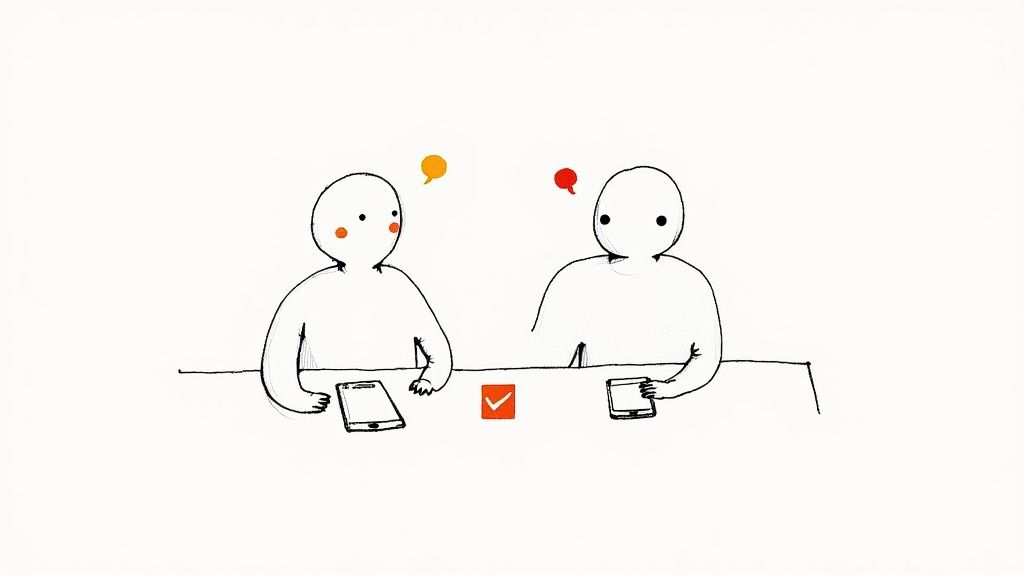
Let's be honest: trying to beat procrastination by yourself feels like a lonely, uphill battle. Most of the time, relying purely on your own willpower is a losing strategy. A much smarter approach is to bring in some social accountability. It adds just enough positive, external pressure to make you way more likely to actually do what you said you would.
This doesn't have to be some big, intimidating thing. It can be as simple as texting a friend your goal for the night: "Hey, I'm going to get this chemistry lab report done by 9 PM." The simple act of telling someone makes the goal feel real and tangible, and your commitment level shoots up instantly.
Simple Ways to Introduce Accountability
You can start weaving accountability into your study routine today with a few dead-simple tactics. They're designed to be easy to start but deliver a surprisingly big motivational kick.
- Find a Study Buddy: Team up with a classmate who gets it. You can set shared deadlines for big projects, look over each other's work, or just have a daily check-in to report what you got done.
- Try Body Doubling: This is a game-changer. It just means working silently alongside someone else, either in person at the library or just on a quiet video call. Their presence alone creates a focused vibe that makes it so much easier to stay on task.
- Declare Your Intentions: Use a group chat with friends or even a social media post to announce your plan. "Going offline for two hours to finish this history essay." It creates a low-stakes sense of being watched, which can be the perfect nudge to get you started.
Turn a Lonely Struggle into a Shared Journey
This is where Tracka’s community-driven approach really makes a difference. The app was built on a simple truth: it’s easier to build consistency when you’re not going it alone. You can join accountability circles with friends or classmates who are also trying to build better habits.
Inside Tracka, you can create a "Daily Study" habit and share your progress with your circle. Getting a notification with a quick "You got this!" from a peer right after you log a tough study session changes the whole dynamic. It stops feeling like a solitary chore and starts feeling like a shared win. This community feature is a key differentiator that helps people stick to routines long-term.
Accountability works because it raises the stakes. When you know someone else is aware of your goal, the cost of procrastinating suddenly feels much higher than the momentary comfort of avoidance.
By making your commitment public, you're tapping into a powerful psychological principle that helps lock in your new routines. If you're curious about the science behind how long it actually takes for these behaviors to stick, our article on how long it takes to form a habit breaks down the process.
Ultimately, using accountability isn't just about getting tonight's homework done. It's about building the kind of unbreakable study habits that lead to long-term success.
How to Bounce Back After a Bad Day
We all have those days. You map out the perfect study session, break down your tasks, block out the time… and then it all just crumbles. A single afternoon of procrastination can quickly spiral into a full-blown week of avoidance, not because the work got any harder, but because the guilt is absolutely paralyzing.
The real skill isn’t learning to be perfect; it's learning how to recover. Beating procrastination for good is all about building resilience. Instead of beating yourself up over a missed study block, the trick is to get curious about what actually went wrong.
Reframe Failure as Feedback
Self-criticism is the fuel that keeps the procrastination cycle churning. When you start telling yourself you’re lazy or undisciplined, you create a wave of negative emotions that makes it even harder to show up tomorrow. A much better approach? Treat the setback like data.
Ask yourself a few simple, judgment-free questions at the end of the day:
- What was my energy level like? Were you genuinely running on empty and just needed a break?
- Was the task confusing? Did you grind to a halt because you didn't really understand the assignment?
- What was the biggest distraction? Did an unexpected text, a noisy roommate, or a tempting YouTube video derail you completely?
This isn't about making excuses. It’s about finding the real friction points in your system. Answering these questions turns a "bad day" into priceless feedback for tweaking your strategy. Maybe you realize you need to tackle homework earlier in the day when your energy is higher, or perhaps you just need to email a teacher for clarification before you start.
A setback is not a reflection of your character—it’s a data point that reveals what needs to be adjusted in your system. Learning to analyze what went wrong without judgment is the most critical skill for building long-term consistency.
This is where a tool like Tracka becomes your ally in building that resilience. Just use its lightweight journaling feature at the end of the day to log a quick reflection. You can jot down a few notes on why a study session went off the rails or celebrate what actually went right.
Over time, Tracka’s AI can spot patterns you might miss on your own, like noticing you’re most likely to procrastinate on Tuesdays after a long day of classes. These personalized insights empower you to make targeted adjustments, turning the occasional slip-up into a stepping stone for a stronger, more sustainable study routine. For more strategies on recovering from setbacks, our guide on getting back on track offers practical steps to regain your momentum.
Questions That Always Come Up About Procrastination
When you’re stuck in a procrastination loop, it’s easy to feel like you’re the only one. You’re not. Let’s tackle some of the most common questions that pop up when students are trying to get a handle on their study habits.
Can I actually stop procrastinating if I have ADHD?
Yes, absolutely. In fact, a lot of the strategies in this guide were practically designed for the ADHD brain. Think about it: breaking huge tasks into tiny, manageable pieces? Using timers to create artificial urgency? These aren't just tricks; they're ways to give your brain the external structure it craves.
The key is to stop relying on internal motivation, which can be slippery for anyone, but especially with ADHD. Instead, you build a system outside of yourself—checklists, timers, and accountability tools like Tracka can provide the focus and momentum you need to get started and keep going.
But what if I have zero motivation?
This is the classic chicken-and-egg problem. You’re waiting to feel motivated so you can start, but motivation often shows up after you’ve already started. Don’t wait for the feeling. It might not come.
Instead, your only goal is to take the smallest, most laughably easy first step you can think of. Seriously. Don't think about writing the essay; just open the document. Don't worry about studying for the final; just find your textbook and put it on your desk. That tiny action is often just enough to crack the inertia and generate a little bit of momentum to carry you to the next step.
How long does it actually take to break this habit?
There's no magic number here. Anyone who tells you it takes exactly 21 days or 66 days is oversimplifying things. Habit change is different for everyone and depends on how deeply ingrained the old pattern is.
Forget the timeline. Focus on being consistent, not perfect. The goal isn’t to have a flawless record from day one. It’s about getting back on track faster when you slip up. Celebrate the small wins—like studying for just 15 minutes when you planned to—and be patient with yourself. Progress is messy, and that's okay.
Ready to build a system that actually works with your brain? Tracka helps you break down tasks, track your consistency, and use AI-powered insights and social accountability to build study habits that stick. Start building your momentum with Tracka today.


