

Maintaining a healthy work-life balance isn't about achieving a perfect 50/50 split. It’s about creating a dynamic state of harmony that flexes with your life's demands. True balance comes from intentionally defining your boundaries, managing your energy (not just your time), and consistently reflecting on what’s working.
This guide provides a practical, evidence-based framework to build these skills. You'll learn how to reclaim your personal time, boost your focus, and feel more in control of your life.
Why Work Life Balance Feels So Broken
In a world of remote work and constant connectivity, the lines between our professional and personal lives have blurred. The old boundary of leaving the office at 5 PM is gone—for many, the office is now the kitchen table. This shift has left millions struggling with consistency and focus. Distractions are everywhere, draining our energy and chipping away at our wellbeing.
It’s no wonder that research shows nearly 80% of people abandon their resolutions. This isn't a failure of willpower; it's the result of not having a sustainable system for change. When we don't build intentional habits, we fall into reactive behaviors like checking emails late at night or sacrificing family time for "just one more task." Living in this constant "on" state is a fast track to burnout, tanked productivity, and the nagging feeling of being perpetually overwhelmed.
The Global Perspective on Balance
This isn't just an individual problem; it’s a global one. The struggle for a sustainable work-life balance is a major priority worldwide, especially as flexible work models reshape how we live.
Countries that rank highest on the life-work balance scale, like New Zealand and Ireland, tend to have strong social support structures, such as generous annual leave and robust healthcare. These frameworks highlight the importance of building supportive systems, both in society and in our own lives. To see how different countries stack up, you can check out the Global Life-Work Balance Index research.
The key isn't to find some mythical, perfect balance. It’s to build an intentional system that allows you to be fully present and effective in both your work and personal life.
The solution is to create a deliberate system for managing your energy and fiercely protecting your time, reinforced by consistent, daily habits. For example, tracking a "daily shutdown ritual" or "no work notifications after 6 PM" builds the muscle of unplugging. This is where a tool like Tracka.AI makes a real difference. Unlike generic habit apps, Tracka combines habit tracking with AI-powered insights and a supportive community, providing the accountability needed to make new routines stick.
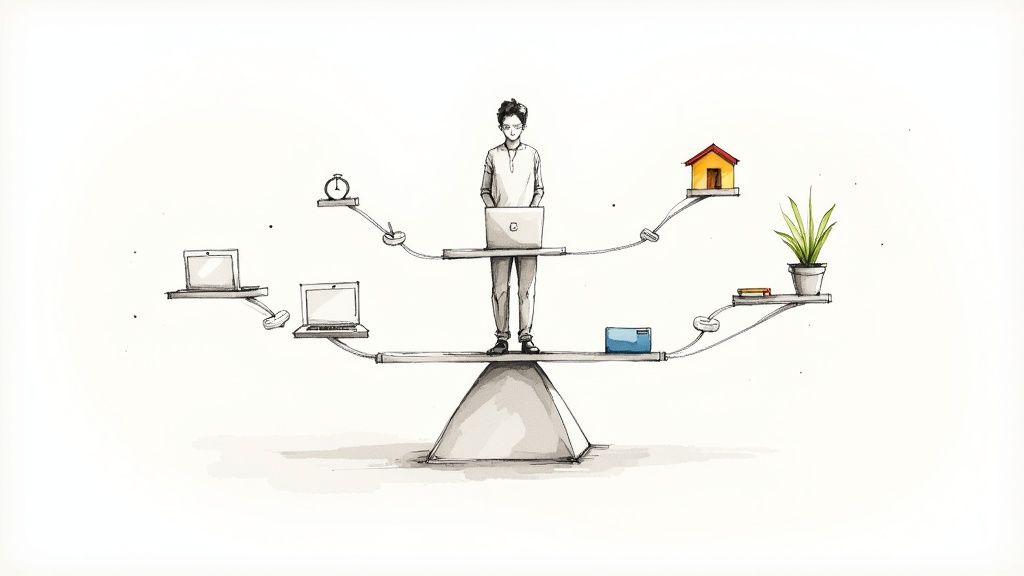
This guide will focus on creating that system. To get started, it helps to understand the core components we'll be working with. The table below breaks down the foundational pillars for achieving a more sustainable sense of harmony.
Core Pillars of Sustainable Work Life Harmony
This table outlines the key components for achieving a sustainable work-life balance, providing a quick reference for the strategies discussed in this guide.
| Pillar | Core Action | Primary Benefit |
|---|---|---|
| Clear Boundaries | Defining non-negotiable rules for work and personal time. | Prevents burnout and protects mental and emotional energy. |
| Energy Management | Focusing on optimizing energy levels, not just managing time. | Increases productivity and allows for more presence in all areas of life. |
| Intentional Habits | Building consistent routines that support your boundaries. | Automates good decisions, reducing reliance on willpower. |
| Reflection & Adaption | Regularly reviewing what’s working and what isn’t. | Ensures your system evolves with your needs and life changes. |
Each of these pillars builds on the others. By focusing on small, consistent actions in these areas, you can finally move from a state of constant overwhelm to one of intentional harmony.
How to Design and Defend Your Boundaries
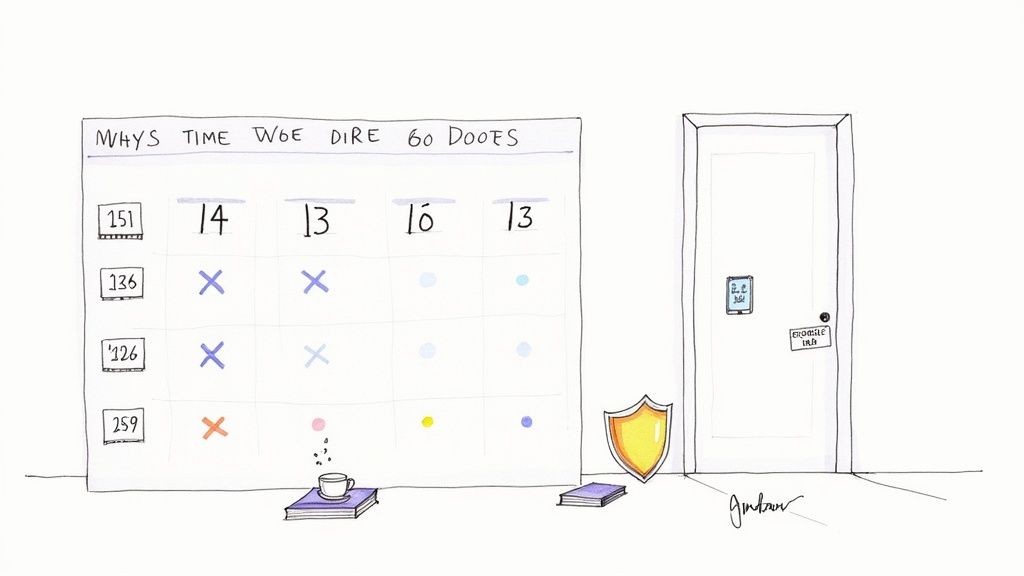
Strong boundaries are the foundation of any real work-life balance. They’re the guardrails that protect your time, focus, and sanity. They aren't just about "saying no"—they're about proactively drawing clear lines around your professional life so you can actually live your personal one.
Without boundaries, work expands to fill whatever space you give it. According to The Harris Poll, a staggering 60% of people find it tough to disconnect from their jobs during personal time. Being constantly on-call isn't a sign of commitment; it's a direct path to burnout. The goal is to shift from a reactive state (answering emails at dinner) to a proactive one where your personal time is as non-negotiable as a client meeting. That requires real intention.
Identify Your Non-Negotiables
First, figure out what you absolutely need to protect. These are the personal commitments that keep you grounded, energized, and healthy. If they get sacrificed week after week, you will burn out.
Once you know what they are, defend them like they're the most important appointments in your day—because they are.
Your non-negotiables might look something like this:
- Protected Mornings: An hour for a workout, meditation, or just coffee and a book before a single notification gets through.
- Device-Free Dinner: A set window every evening where phones and laptops are off-limits.
- Deep Focus Blocks: A couple of two-hour periods during the day where you go completely dark—no alerts, no pings—to get meaningful work done.
- A Real Weekend: A hard rule not to open your work laptop from Friday evening until Monday morning.
These aren't just nice ideas. They're appointments with yourself. Put them on your calendar. Giving your personal time a physical spot in your schedule makes it concrete and much harder to ignore.
Turn Boundaries into Automatic Habits
Drawing the lines is one thing; holding them is where the real work happens. This is all about consistency. You need to make your new rules so automatic that you don't even have to think about them anymore.
Take a remote worker who’s drowning in notifications. They could create a simple habit called the "End-of-Day Shutdown." It’s a small ritual: close every work tab, shut down Slack, and physically put the laptop away in a drawer. Repeating this action every single day trains your brain to recognize the workday is truly over.
The most effective boundaries aren’t maintained by willpower; they’re upheld by habits. Let your routines do the heavy lifting.
This is where a habit tracker like Tracka.AI can be a game-changer. It makes the process visible and motivating. You can set specific, trackable goals like "No Emails After 6 PM" or "30-Minute Lunch Away from Desk." Checking it off each day reinforces the new behavior and provides a sense of accomplishment.
Over time, Tracka's AI-powered insights can even show you how respecting these boundaries correlates with your energy levels and focus, giving you the data to prove your new system works. Eventually, these conscious actions become second nature, building a durable defense against work creep. If you feel old patterns pulling you back, you can get a deeper dive into the mechanics in our guide on how to break bad habits and build better ones.
Managing Your Energy, Not Just Your Time
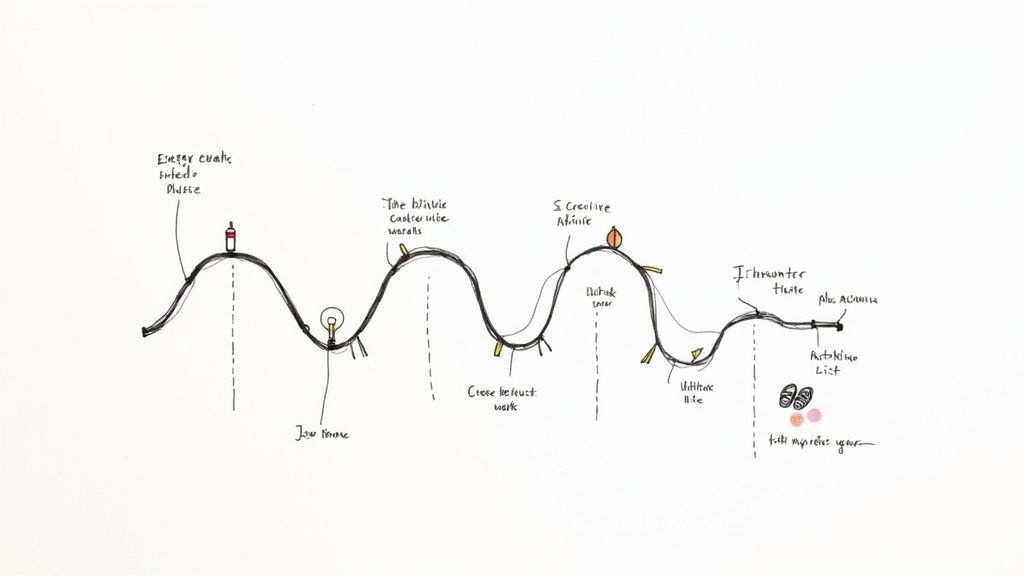
Many high-achievers burn out despite having perfectly organized calendars. The hard truth is that mastering your schedule is only half the battle. To achieve sustainable productivity and a work-life balance that feels real, you have to start managing your energy, not just your time.
This means working with your body’s natural rhythm instead of fighting it. We all have peaks and troughs in our physical and mental energy. Forcing yourself to tackle a high-stakes creative project during a low-energy slump is like trying to drive a car on fumes—it’s inefficient and leaves you drained. A much smarter approach is to observe your energy patterns and align your tasks accordingly.
Aligning Tasks with Your Energy Flow
The first step is to pay attention. Are you a morning person who’s ready for deep work right after your first coffee? Or do you hit your creative stride in the afternoon? Knowing your own rhythm is a game-changer.
Once you have a sense of your daily flow, you can start structuring your day around it:
- High-Energy Peaks: This is your prime time. Schedule tasks that demand intense focus, strategic thinking, or creativity. Think writing a complex report, brainstorming a new project, or solving a tough problem.
- Energy Troughs: Use these periods for low-demand activities that have to get done but don't require your best brainpower. This is perfect for answering emails, scheduling meetings, or organizing your digital workspace.
This simple shift changes your relationship with your schedule. Instead of constantly fighting your body's internal clock, you’re flowing with it. This not only makes you more effective during work hours but also conserves the mental fuel needed to enjoy your personal life.
The goal isn’t to cram more into your day. It’s to get more out of the hours you’re already working by using your energy wisely. This is how you prevent the daily drain that leads to burnout on evenings and weekends.
This energy-centric mindset is heavily influenced by our work culture. For example, some demanding work cultures see 27% of employees work over 50 hours a week, leaving little time for recovery. You can find more insights on how global work trends impact balance.
Building Energy-Boosting Habits
To keep your energy levels stable, you have to actively replenish them. This isn't about grand gestures; it's about building small, consistent habits that act like deposits into your energy bank account.
Think about tracking a few simple but powerful habits with a tool like Tracka. These actions might seem minor, but their cumulative effect is massive.
- Strategic Micro-Breaks: Log a '5-Minute Stretch' every hour to fight off physical and mental fatigue.
- Proper Hydration: Track 'Daily Water Intake' to keep yourself mentally sharp throughout the day.
- Wind-Down Routine: Create a non-negotiable 'End of Day Walk' to create a clear boundary and signal to your brain that the workday is officially over.
Using Tracka helps you see the data behind how you feel. The AI-powered insights might reveal a direct link between that '15-Minute Walk' you took and your reported focus levels the next morning. This kind of data makes it clear that these small actions are essential for high performance, not just luxuries. Building these habits also strengthens your self-regulation, a key skill you can learn more about in our guide on what willpower truly is.
Making Remote and Hybrid Work Actually Work
The shift to remote and hybrid work offers incredible freedom, but it's a double-edged sword. When your living room is also your office, the lines between "work time" and "my time" can disappear completely. This constant overlap is a major roadblock to a healthy work-life balance, but you can reclaim your personal time with a few intentional habits.
The data backs this up. A Clockify survey found that 76% of hybrid workers and 85% of fully remote employees say improved work-life balance is the single biggest perk of their setup. The trick is to harness that flexibility without letting your job colonize your life. The goal is to create clear mental and physical separations by building routines that tell your brain when it's time to be "on" and, more importantly, when it's time to switch "off."
Create a Shutdown Ritual
One of the most powerful things you can do is create an end-of-day shutdown ritual. This isn’t a complex process; it’s a sequence of small actions you do every day to signal that the workday is officially over. It’s a deliberate message to your mind and body that it's time to shift from professional to personal mode.
Your ritual can be incredibly simple. It might look something like this:
- Quickly review and plan your top priorities for tomorrow.
- Close out all work-related tabs and apps on your computer.
- Physically put your work laptop away—out of sight, out of mind.
- Take a short walk around the block or do a few stretches to release the day's tension.
Doing this consistently creates a powerful psychological boundary. It becomes your new commute, replacing the drive home and helping you resist the late-night temptation to check "just one more thing."
A shutdown ritual isn’t about being rigid; it's about being intentional. It’s the conscious act of reclaiming your personal time and protecting your energy for the parts of life that happen after you log off.
Reinforce Boundaries with Habit Tracking
Turning these rituals into automatic behaviors is what makes them stick. This is where tracking your actions can make a huge difference. When you make these new routines visible, you create a feedback loop that reinforces your commitment.
Using an app like Tracka.AI lets you log the specific habits that support these new boundaries. For instance, you could track:
- "Morning Transition Routine" to make sure you start your day with focus instead of diving straight into emails from bed.
- "Pack Away Laptop" to solidify your end-of-day shutdown and make it non-negotiable.
- "Core Work Hours Maintained" to protect your evenings from that dreaded work creep.
By logging these small wins every day, you build momentum. Over time, Tracka’s AI-powered insights can start showing you how these tiny habits correlate with things like improved focus and lower stress, turning your flexible schedule into a genuine asset for a more balanced life.
Building Your System for Reflection and Adjustment
A sustainable work-life balance isn't a destination you reach once. It’s an ongoing process of tiny adjustments. The best way to stay on track and prevent burnout is to build an intentional feedback loop into your life. This simply means regularly pausing to ask yourself: "Is this working?"
A quick weekly review or even a lightweight daily journal entry can provide incredible clarity. This simple practice is the difference between surviving your weeks and consciously designing them. Consistency is everything—a few minutes of reflection each day compounds into powerful self-awareness over time.
Asking the Right Questions
Real reflection isn't just listing what you did; it's about digging into how you felt and why. The goal is to ask questions that cut through the noise of your daily grind.
At the end of each week, try asking yourself things like:
- When did I feel most energized and engaged this week?
- Which boundary was the hardest for me to maintain, and why?
- What was one thing that completely drained my focus or emotional battery?
Answering these honestly exposes the friction points in your system. For instance, you might notice your energy consistently tanks on Wednesday afternoons. That’s not a random fluke; it's data. It points to a potential problem, like skipping lunch or stacking too many draining meetings back-to-back.
If you're looking to build this reflective muscle, our guide on how to start journaling offers some practical steps to turn it into a low-effort, high-impact habit.
Using Data for Smarter Adjustments
Modern tools can help you spot the patterns your brain might otherwise miss. This is where habit tracking moves beyond just checking off boxes and becomes a powerful tool for self-discovery.
When you consistently log your habits in an app like Tracka.AI, you're creating a rich dataset about your own life. The AI-powered insights can then start connecting the dots for you.
A great system for work-life balance isn't static. It breathes and adapts. Regular, honest reflection is the mechanism that allows your system to evolve with you, ensuring it remains effective as your life and priorities change.
For example, Tracka might surface a trend showing that your reported focus levels are 20% higher on days you complete your "Morning Walk" habit. This isn't just a motivational pat on the back. It's a data-driven insight proving that a small action has a measurable impact on your performance and well-being. You can then use that information to double down on what works.
The infographic below shows a simple three-step process for setting firm boundaries when working remotely—a common challenge that reflection can help you solve.
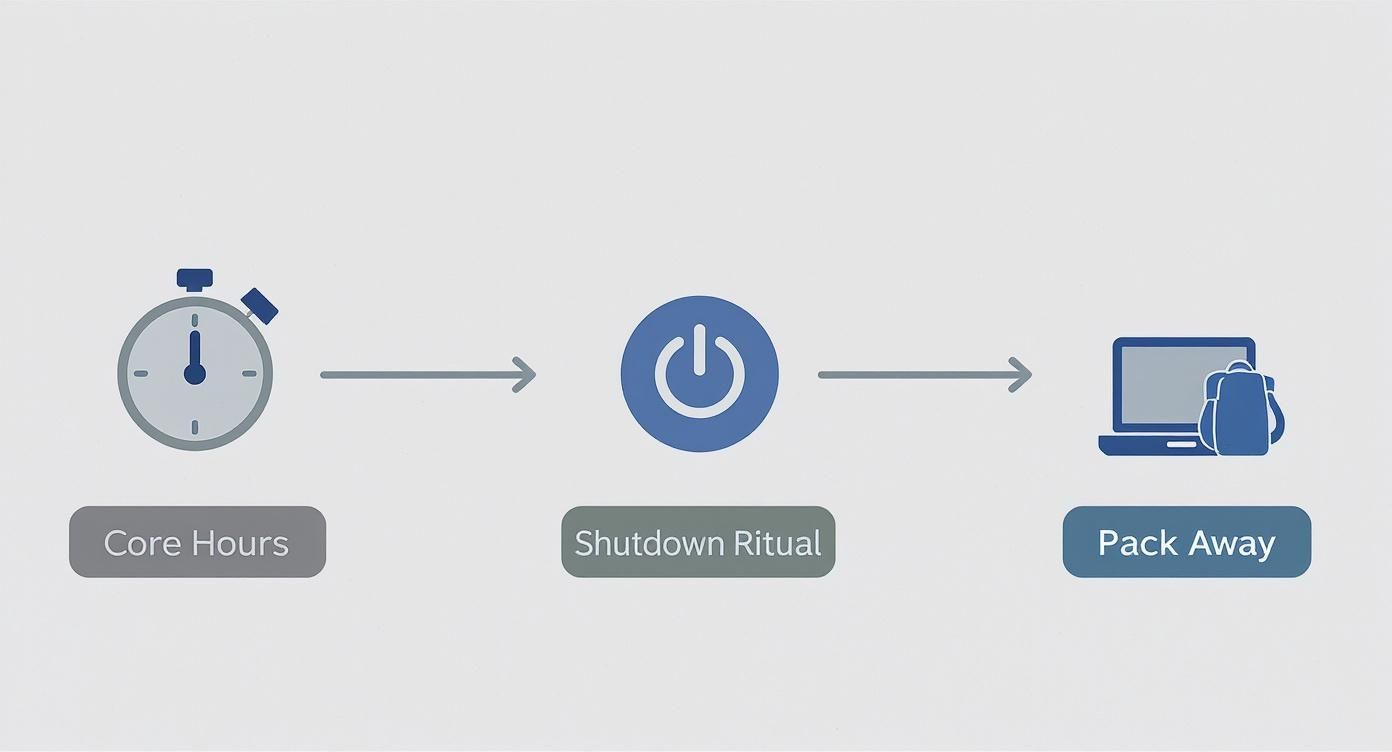
This visual flow—defining core hours, creating a shutdown ritual, and physically packing away your work—highlights the essential steps for mentally disconnecting to protect your personal time.
Common Questions About Work Life Balance
Navigating how to maintain a work life balance brings up plenty of real-world hurdles. Even with a solid plan, questions and challenges are just part of the process. Here are some clear, practical answers to common issues people run into.
What If My Job Culture Expects Me to Be Always On?
This is a tough one, especially when the pressure to be constantly available is unspoken. The key is to start small and manage expectations proactively rather than waiting for burnout to force your hand. You don't need to announce some dramatic shift; instead, just start modeling the behavior you want to see.
Begin by setting a clear end time for your workday and actually sticking to it. A simple shutdown ritual can help you mentally disconnect. If you get messages after hours, fight the urge to reply right away unless it’s a true emergency. Waiting to respond until the next morning sends a subtle but powerful message that you have boundaries.
Over time, this consistency trains your colleagues to respect your time. Leading by example can often have a ripple effect, encouraging a healthier team culture without needing a direct confrontation.
How Do I Balance Work and Life With an Unpredictable Schedule?
When your schedule is chaotic, energy management becomes way more important than time management. You can't always control when you work, but you can absolutely control your rituals and how you recharge.
Instead of trying to force rigid time blocks into a schedule that won't cooperate, focus on building flexible, non-negotiable habits.
- A "Start Day" Anchor: No matter what time you begin, kick things off with the same five-minute routine—like journaling or stretching—to ground yourself.
- Energy-Boosting Micro-Breaks: Squeeze in short, restorative breaks whenever you can. A two-minute walk or a quick mindfulness exercise can make a huge difference.
- A Consistent Shutdown: It doesn't matter when you finish; perform the same shutdown ritual to signal to your brain that the professional day is over.
Using a tool like Tracka.AI helps you log these small actions. Seeing your consistency, even on the messiest days, provides a sense of control and proves you're still prioritizing your wellbeing.
Is It Possible to Have Work Life Balance with Kids?
Yes, but it requires ruthless prioritization and a willingness to let go of perfection. For working parents, balance isn't about an even 50/50 split; it's about being fully present wherever you are. When you're with your kids, actually be with them—not half-replying to emails on your phone.
The goal is to create clear separations. When work bleeds into family time, you end up feeling like you’re failing at both. Define protected family zones, like device-free dinners or a dedicated story time, and defend them fiercely.
This is also where communication is vital. Talk to your manager and your partner about what you need. Sometimes, a tiny adjustment, like shifting your hours by 30 minutes, can make all the difference in the world. Balance with a family is a team sport.
Finally, remember that some weeks will be work-heavy, and others will be family-heavy. The key is to look at the bigger picture and ensure that, over the course of a month, you're investing your energy in the places that truly matter most to you.
Building a system that works takes time and consistent effort. It's a journey of small, intentional actions repeated daily. Tracka.AI is designed for a global audience to make this process achievable, combining habit tracking, AI-powered insights, and social accountability. Start building a more balanced life today by visiting https://tracka.ai.


