

We've all been there: starting a new week with a perfect plan, determined to adopt good working habits, only to find ourselves drowning in distractions by Tuesday. The modern workplace is a minefield of notifications, shifting priorities, and constant context-switching. This isn't a personal failure; it's a systemic problem. Statistics show that the average person struggles with consistency, with a staggering 80% abandoning their resolutions and goals.
The problem isn't a lack of desire, but a lack of a framework designed for the realities of our distractible world. Traditional advice like "just focus" is not only unhelpful but often counterproductive. It ignores the real challenge: building a sustainable system that works with your brain, not against it. This guide breaks down 10 specific, actionable working habits that are about working smarter, not harder.
We'll show you how to build a personalized system that manages your energy, prioritizes what truly matters, and turns intention into consistent action. By leveraging practical techniques and a smart tool like Tracka—which combines habit tracking with AI-powered insights and social accountability—you can finally make your good working habits stick and see a real-life impact on your energy, focus, and productivity.
1. Time Blocking: The Calendar-First Approach to Intentional Work
Time blocking is a powerful productivity method where you schedule your entire day into specific, non-negotiable blocks of time. Instead of reacting to a long, often overwhelming to-do list, you proactively assign every task a home on your calendar. This approach transforms your day from a series of decisions into a clear, visual roadmap, which is one of the most effective good working habits for reducing cognitive load and managing your focus intentionally.
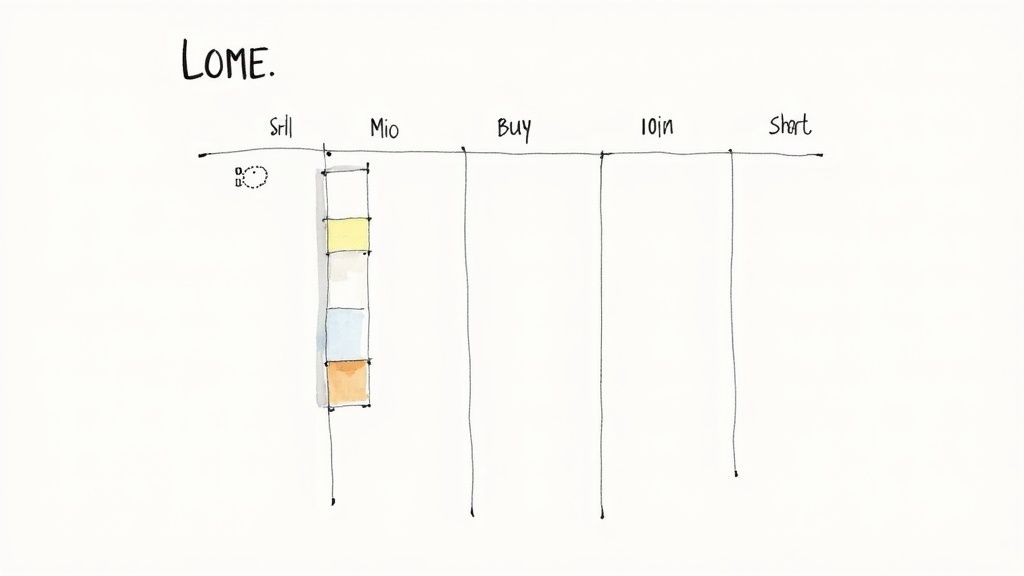
This technique creates firm boundaries, ensuring that deep work, administrative tasks, and even breaks receive dedicated attention. For example, a marketing manager might block 9-11 AM for "Content Creation," 1-2 PM for "Team Sync," and 4-4:30 PM for "Email Triage." By treating these blocks as appointments, you defend your focus and build momentum. For a deeper dive into structuring your schedule for maximum output, explore additional strategies on effective time management for entrepreneurs.
How to Implement Time Blocking
To start, you don’t need to schedule every minute. Begin by creating 3-4 key blocks for your most important tasks.
- Color-Code Categories: Assign different colors to task types (e.g., blue for deep work, green for meetings, yellow for personal breaks) for at-a-glance clarity.
- Include Buffers: Schedule 10-15 minute gaps between blocks to stretch, reset, or handle unexpected small tasks. This prevents a domino effect if one task runs over.
- Communicate Your Plan: Share your calendar with colleagues so they know when you are in a "do not disturb" focus session.
This method turns abstract goals into concrete, scheduled actions, making it easier to track progress and stay consistent. Using Tracka to log your time blocks can provide personalized insights into how you're spending your time, helping you optimize your schedule for better energy and focus.
2. The Pomodoro Technique: Mastering Focus in 25-Minute Sprints
The Pomodoro Technique is a renowned time management method that uses a timer to break down work into focused, 25-minute intervals, known as "pomodoros," separated by short breaks. This cyclical system leverages a sense of urgency to sharpen concentration and introduces mandatory rest to prevent mental fatigue, making it one of the most effective good working habits for anyone who struggles with procrastination or maintaining long-term focus.
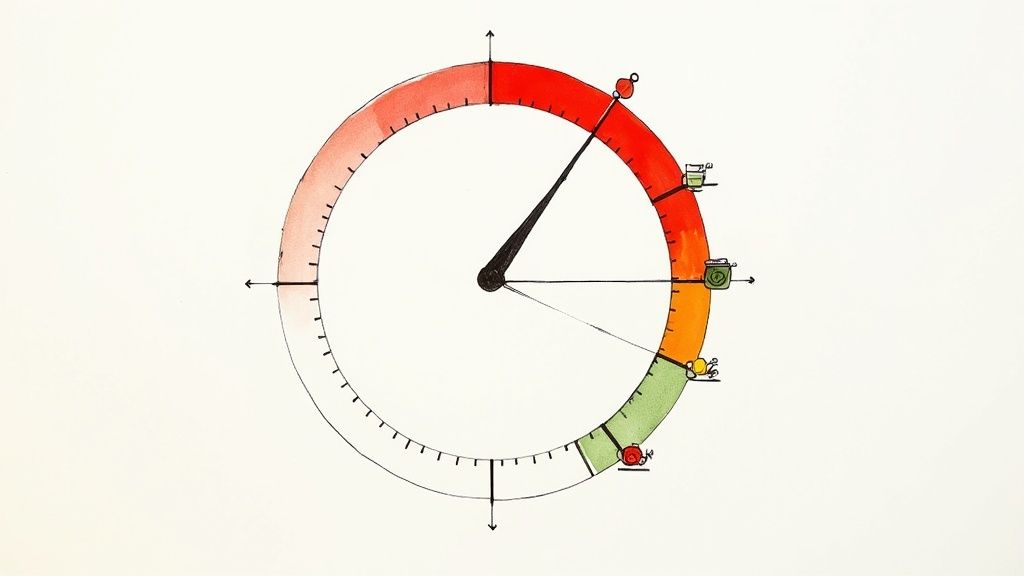
This approach is profoundly effective because it transforms intimidating tasks into a series of manageable, bite-sized sprints. Instead of facing three hours of report writing, you commit to just one 25-minute session—a much lower psychological barrier. After four consecutive pomodoros, you reward yourself with a longer 15-30 minute break. For students looking to beat procrastination, you can learn more about how this method helps by exploring strategies for how to stop procrastinating on homework.
How to Implement The Pomodoro Technique
The key to this method is honoring the timer. When it rings, you stop working, even if you are in the middle of a sentence.
- Use a Physical Timer: Opt for a dedicated kitchen timer or desk clock instead of your phone to minimize digital distractions and create a clear auditory cue.
- Adjust Your Intervals: While 25 minutes is standard, feel free to experiment. A complex task might benefit from a 30-minute block, while a simple one might only need 15.
- Make Breaks Restful: Use your short breaks to stand up, stretch, or get a glass of water. Avoid checking emails or social media, which keeps your brain in "work mode."
Tracking your pomodoros in Tracka helps you see exactly how much focused time you dedicate to your goals. The app’s AI-powered insights can even reveal trends, like which days of the week you complete the most focus sessions, helping you schedule tasks more effectively.
3. Deep Work Practice: The Art of Uninterrupted Focus
Deep work is a professional activity performed in a state of distraction-free concentration, pushing your cognitive capabilities to their absolute limit. Popularized by author Cal Newport, this approach involves intentionally eliminating shallow tasks and interruptions to dedicate extended periods to complex, high-value work. This is one of the most impactful good working habits because it directly produces significant, hard-to-replicate results and fosters a profound sense of accomplishment.
This practice is essential for anyone whose role demands intense focus, such as a software engineer debugging a complex algorithm or a writer crafting a detailed manuscript. By creating an environment impenetrable to distractions, you allow your brain to engage fully with the task at hand. This level of concentration is where true breakthroughs happen, transforming your output from merely "done" to exceptionally well-crafted. For more on creating focused work environments, consider how building a productive routine can support this habit.
How to Implement Deep Work Practice
Start by identifying the one or two most critical tasks that require your full brainpower.
- Schedule Your Peak Hours: Block out 90-minute sessions during your most cognitively alert time of day. This aligns with your natural ultradian rhythm for optimal focus.
- Create a Fortress of Solitude: Put your phone on "Do Not Disturb," close all unnecessary tabs, and turn off notifications. Communicate your unavailability to colleagues during these blocks.
- Establish a Pre-Work Ritual: Create a simple routine to signal to your brain it’s time to focus, like making a specific drink or tidying your desk.
Tracking your deep work hours in Tracka can provide powerful insights into your productivity patterns, helping you optimize and protect this crucial time for better performance and reduced stress.
4. Priority Matrix / Eisenhower Box
The Priority Matrix, famously known as the Eisenhower Box, is a decision-making framework designed to help you categorize tasks based on their urgency and importance. Instead of treating all tasks as equally demanding, this method forces you to evaluate what truly requires your immediate attention versus what can be scheduled, delegated, or eliminated. This strategic approach is one of the most effective good working habits for cutting through the noise and focusing on high-impact activities.
This framework divides your to-do list into four distinct quadrants: Urgent & Important (Do), Important but Not Urgent (Schedule), Urgent but Not Important (Delegate), and Neither (Delete). For instance, a project manager might place a critical bug fix in Quadrant I, while long-term feature development planning goes into Quadrant II. This clear separation prevents the constant pull of low-value, "urgent" tasks from derailing strategic progress, a common challenge many professionals face.
How to Implement the Priority Matrix
Getting started is as simple as drawing four squares on a piece of paper or a whiteboard and sorting your current tasks.
- Protect Quadrant II: This is where long-term growth happens (e.g., strategic planning, skill development, relationship building). Proactively schedule time for these tasks on your calendar before your week fills up.
- Delegate or Automate Quadrant III: Identify tasks that are urgent but don't require your specific expertise. These are prime candidates for delegation to team members or automation with software.
- Conduct a Weekly Review: Priorities shift. Set aside 15 minutes each week to review your matrix and re-categorize tasks to ensure your efforts remain aligned with your most important goals.
Using this model within Tracka allows you to tag tasks by quadrant, helping you visualize where your energy is going and ensuring you consistently make time for what matters most for your career growth.
5. Task Batching and Context Consolidation
Task batching is a highly effective method where you group similar, repetitive tasks together and complete them in a single, focused session. Instead of constantly shifting mental gears between writing, answering emails, and updating spreadsheets, you consolidate related activities into dedicated windows. This practice is one of the most powerful good working habits for preserving mental energy, as it dramatically reduces the cognitive cost associated with context switching.
This technique, popularized by productivity experts like Tim Ferriss, creates a rhythm that allows you to gain momentum and operate more efficiently. For instance, a small business owner might dedicate a 90-minute block on Mondays and Thursdays solely to processing invoices, answering client emails, and scheduling appointments. This prevents administrative duties from bleeding into and disrupting deep work sessions scheduled for other times. By handling all similar tasks at once, you streamline your workflow and protect your most valuable resource: your focus.
How to Implement Task Batching
Getting started is simple. Identify one category of recurring tasks that frequently interrupts your day and group it into a single block.
- Identify Your Batches: List common, low-focus tasks that you can group. Good starting points include email, social media updates, returning calls, or processing paperwork.
- Schedule Batching Blocks: Designate specific times in your calendar for these batches. For example, "Email Triage" from 11:30 AM to 12:00 PM and again from 4:00 PM to 4:30 PM.
- Communicate Your System: Let your team know about your batching schedule. This manages expectations for response times and protects your focused work periods.
By committing to this habit, you create predictable structures that make your workday less chaotic and more productive. Logging your batched sessions in Tracka provides data to confirm how this habit boosts your efficiency and frees up mental space.
6. The Two-Minute Rule: Conquering Procrastination on a Micro-Scale
The Two-Minute Rule is a simple yet profound productivity principle stating that if a task takes less than two minutes to complete, you should do it immediately. Popularized by David Allen in his "Getting Things Done" methodology, this approach prevents small, actionable items from cluttering your to-do list and draining your mental bandwidth. This is one of the most effective good working habits as it circumvents decision fatigue and creates immediate momentum.
Instead of deferring quick tasks like responding to a simple Slack message or filing a digital document, you handle them on the spot. This habit stops small responsibilities from snowballing into a source of nagging, low-grade stress. It creates a "quick win" effect that builds confidence and clears the way for more substantial, deep-work sessions, making it a cornerstone habit for anyone looking to streamline their workflow.
How to Implement The Two-Minute Rule
The key is to integrate this rule into the natural pauses of your day without letting it derail your primary focus.
- Use Transition Times: Leverage the moments between meetings or work blocks to clear out any two-minute tasks that have accumulated.
- Set a Timer: If you're concerned a "quick task" might expand, set a two-minute timer. When it goes off, you either finish or formally schedule the task for later.
- Adjust Your Threshold: While two minutes is the standard, feel free to adjust. For some roles, a five-minute rule might be more practical and yield similar benefits.
This method transforms friction into flow, making it easier to maintain a clean and manageable task list. It’s a simple but powerful habit to track in Tracka to see how small actions contribute to a more organized and stress-free workday.
7. Regular Review and Reflection
Regular review and reflection is the practice of systematically examining your work, progress, and habits at scheduled intervals, such as daily, weekly, or monthly. Instead of just completing tasks and moving on, this habit forces you to pause, analyze, and adjust your approach. It's the essential feedback loop that optimizes all other good working habits, ensuring your daily actions remain aligned with your long-term goals and preventing you from repeating ineffective patterns.
This metacognitive practice transforms productivity from a guessing game into a data-driven process. For example, a freelancer might conduct a Friday review to compare completed projects against their weekly plan, identifying bottlenecks and celebrating wins. Similarly, an Agile team uses sprint retrospectives to discuss what went well and what could be improved for the next cycle. This scheduled introspection builds self-awareness and provides the clarity needed for continuous improvement.
How to Implement Regular Review and Reflection
The key is consistency, not complexity. Start with a short, scheduled session and build from there.
- Schedule It: Block out time on your calendar for reviews and treat them as non-negotiable appointments. A 15-minute daily reflection or a 60-minute weekly review is a great start.
- Use Specific Prompts: Guide your reflection with targeted questions like: "What was my biggest win this week?", "Where did I get stuck?", and "What one change can I make next week?"
- Document Insights: Keep a log or journal of your reflections to spot recurring patterns over time. This creates a powerful record of your growth and challenges. For guidance on getting started, explore our guide on how to start journaling.
By making reflection a core habit in Tracka, you create a system that not only tracks what you do but also helps you understand why it works, leading to better focus and well-being.
8. Minimizing Meetings and Communication Overhead
Meetings and constant communication pings are major disruptors of focus, often fragmenting the workday into small, unproductive chunks. Minimizing this overhead involves a deliberate strategy to reclaim your time by questioning the necessity of every synchronous interaction. This is one of the most impactful good working habits for preserving deep work blocks, as it directly reduces the cognitive switching costs that drain mental energy.
This approach means shifting towards an "asynchronous-first" mindset, popularized by remote-first companies like Basecamp and GitLab. Instead of defaulting to a meeting to share information or make a decision, you prioritize clear, written communication that allows colleagues to engage on their own schedules. This not only protects individual focus time but also creates a valuable, searchable record of discussions and decisions, preventing knowledge from being lost in verbal exchanges.
How to Implement Meeting and Communication Reduction
Start by auditing your calendar and communication channels to identify low-value interactions that can be eliminated or changed.
- Require an Agenda and Objective: Mandate that every meeting invitation includes a clear purpose and desired outcome. If it lacks one, you have grounds to decline or ask for clarification.
- Replace Status Updates with Async Posts: Use tools like Slack, Asana, or a shared document for weekly updates. This frees up the 30-60 minutes typically lost to a recurring status meeting.
- Establish 'No-Meeting' Zones: Block out specific days (like "No-Meeting Fridays") or times of day (e.g., 9-11 AM) as dedicated focus periods across the team.
By tracking your "focus hours protected" in Tracka, you can tangibly see how this habit restores valuable time for high-impact work, leading to better performance and less workplace stress.
9. Habit Stacking and Environment Design
Habit stacking is the practice of anchoring a new, desired behavior to an existing, automatic habit. Instead of relying on willpower, you leverage momentum from a routine you already perform without thinking. Paired with environment design, which involves structuring your workspace to make good choices effortless and bad choices difficult, this becomes one of the most powerful good working habits for building consistency with minimal mental strain.
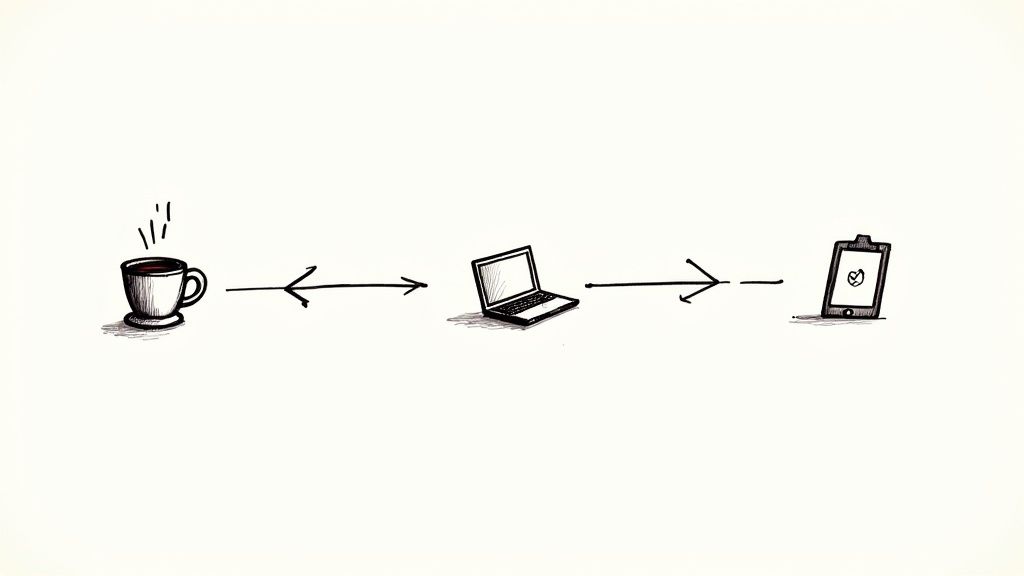
Popularized by authors like James Clear and BJ Fogg, this dual strategy removes friction from your productive workflows. For instance, you could stack checking your daily priorities onto your morning coffee routine. By designing your environment to support this, you might place your planner or open your task app right next to your coffee maker the night before, creating a seamless, automatic trigger for focused work.
How to Implement Habit Stacking and Environment Design
The goal is to make productivity the path of least resistance. Start by identifying one small habit to stack and one environmental tweak.
- Use the Formula: Frame your new habit with the simple rule: "After [Current Habit], I will [New Habit]." For example, "After I finish a client call, I will immediately add action items to my project board."
- Add Friction to Distractions: Make unhelpful behaviors harder. Log out of social media accounts on your work computer, move distracting apps off your phone’s home screen, or place your phone in another room during focus blocks.
- Reduce Friction for Good Habits: Make desired behaviors easier. Keep a water bottle on your desk, set your work browser's homepage to your Tracka dashboard, and arrange your desk so essential tools are within arm’s reach.
By engineering your environment and routines, you create an ecosystem where positive actions are the default, not the exception, making it easier to achieve your goals.
10. Skill Development and Continuous Learning
Dedicating regular, scheduled time to learning is a habit that separates high-performers from the pack. Instead of merely executing daily tasks, this approach involves a deliberate investment in your professional growth by acquiring new skills, deepening expertise, and exploring new tools. Embracing continuous learning transforms your career into an upward trajectory, preventing stagnation and keeping your work engaging, which is one of the most impactful good working habits you can cultivate.
This proactive growth mindset ensures you remain valuable and adaptable in a rapidly changing work environment. For example, a software developer might dedicate 10% of their work time to a new programming language, or a sales professional could study behavioral psychology to better understand client motivations. By consistently building your skill set, you compound your professional worth and open doors to new opportunities, making learning an essential part of your job, not just an afterthought.
How to Implement Continuous Learning
Integrating learning into a busy schedule requires intention. Start by blocking off a small, consistent window of time each week dedicated solely to growth.
- Schedule Learning Blocks: Treat learning time like a critical meeting. Put it on your calendar, whether it's 30 minutes daily or a two-hour block on Friday afternoons.
- Apply Skills Immediately: Find a small, low-stakes project where you can apply what you’ve just learned. This hands-on practice helps solidify new knowledge.
- Set Quarterly Goals: Define one or two specific skills you want to develop each quarter. This provides clear direction and a measurable outcome to work toward.
This habit turns professional development from a vague idea into a structured, actionable process. Using Tracka can help you stay consistent with your learning goals, ensuring you make tangible progress toward a more skilled and fulfilling career.
Top 10 Working Habits Comparison
| Technique | Implementation Complexity 🔄 | Resource Requirements ⚡ | Expected Outcomes ⭐ | Ideal Use Cases 💡 | Key Advantages 📊 |
|---|---|---|---|---|---|
| Time Blocking | Medium — calendar setup and discipline required 🔄 | Calendar tool, planning time; moderate ⚡ | Improved focus, measurable time allocation ⭐⭐⭐ | Knowledge workers, managers, developers, creatives 💡 | Reduces context-switching; increases accountability 📊 |
| The Pomodoro Technique | Low — simple repeated timer cycles 🔄 | Timer (app or physical); minimal ⚡ | Short-term focus, less procrastination ⭐⭐ | Students, writers, routine tasks, short-focus work 💡 | Easy to adopt; combats procrastination 📊 |
| Deep Work Practice | High — needs sustained planning and environment control 🔄 | Quiet space, long uninterrupted blocks, discipline; high ⚡ | High‑quality output, skill development, innovation ⭐⭐⭐⭐ | Research, complex problem solving, long-form writing 💡 | Produces high-value work and competitive advantage 📊 |
| Priority Matrix / Eisenhower Box | Low–Medium — requires judgment and regular review 🔄 | Simple template or board; low ⚡ | Better prioritization; fewer crisis-driven tasks ⭐⭐⭐ | Managers, project triage, strategic planning 💡 | Clarifies priorities; simplifies delegation 📊 |
| Task Batching & Context Consolidation | Medium — grouping and scheduling similar work 🔄 | Time blocks, coordination with stakeholders; moderate ⚡ | Higher throughput, reduced switching cost ⭐⭐⭐ | Email, admin, content workflows, customer support 💡 | Boosts efficiency and flow; fewer errors 📊 |
| The Two-Minute Rule | Very low — instant decision heuristic 🔄 | Virtually none; negligible ⚡ | Less backlog; quick wins and momentum ⭐⭐ | Small admin tasks, quick messages, simple errands 💡 | Clears minor items immediately; lowers cognitive load 📊 |
| Regular Review & Reflection | Medium — needs structure and consistency 🔄 | Scheduled time, tracking tools or logs; moderate ⚡ | Continuous improvement; alignment with goals ⭐⭐⭐ | Teams (retrospectives), personal weekly reviews, OKRs 💡 | Detects issues early; refines systems and habits 📊 |
| Minimizing Meetings & Communication Overhead | Medium–High — cultural and process changes 🔄 | Documentation tools, async workflows; moderate–high ⚡ | More uninterrupted time; less fragmentation ⭐⭐⭐ | Remote-first orgs, cross-timezone teams, knowledge work 💡 | Recovers deep work time; reduces meeting fatigue 📊 |
| Habit Stacking & Environment Design | Medium — upfront design and cue identification 🔄 | Minor physical/digital changes, cues; low–moderate ⚡ | Sustainable habits; reduced willpower needs ⭐⭐⭐ | Habit formation, routines, reducing distractions 💡 | Makes behaviors automatic; reduces decision fatigue 📊 |
| Skill Development & Continuous Learning | Medium — requires planning and commitment 🔄 | Time allocation, budget, courses/mentors; moderate–high ⚡ | Long-term career value and capability growth ⭐⭐⭐⭐ | Professionals aiming to upskill, career transitions 💡 | Increases adaptability and long-term ROI on skills 📊 |
From Habits to Systems: How Tracka Makes Consistency Your Superpower
We've explored ten powerful strategies for transforming your workday, from the focused discipline of the Pomodoro Technique and Deep Work to the organizational clarity of the Priority Matrix and Task Batching. Each of these represents a significant step toward reclaiming your time and energy. You now have a toolkit filled with good working habits designed to combat distraction, reduce overwhelm, and amplify your impact.
However, knowledge without application is just potential. The real challenge, as many of us know, isn't starting a new habit; it's sustaining it beyond the first week. Willpower is a finite resource, and memory can be unreliable when you're navigating a demanding schedule. This is precisely where a dedicated system becomes not just helpful, but essential for lasting change.
Turning Intention into Action
The bridge between wanting to be productive and consistently being productive is built with small, daily actions. Each habit we've discussed, whether it's the Two-Minute Rule or Habit Stacking, thrives on repetition and feedback. Without a system to track these efforts, you're flying blind.
- You can't improve what you don't measure. Did you successfully complete your planned Deep Work sessions this week? How many Pomodoro cycles did it take to finish that report? Tracking provides the data you need to see what's working.
- Consistency builds momentum. Every checkmark in a habit tracker is a small victory. These wins compound over time, reinforcing the neural pathways that make your new habits automatic.
- Accountability provides structure. Knowing you have a system to report back to, even if it's just an app, creates the external structure needed to follow through when motivation wanes.
Your Intelligent Partner in Productivity
This is where Tracka transcends the role of a simple checklist. It's designed to be the intelligent scaffolding that supports your journey toward mastering good working habits. Unlike generic habit apps, it provides personalized insights and a community-driven approach that helps you stick to your routines.
Imagine logging your Task Batching sessions and having Tracka's AI-powered insights reveal a direct correlation between that habit and your reported energy levels. Picture getting a gentle reminder for your end-of-day reflection, turning a forgotten task into a cornerstone of your growth. This is how you move from merely trying habits to building an intentional, high-performance work system tailored to you. The journey to a more focused, fulfilling work life begins with the decision to stop struggling alone and start building a system for success.
Ready to turn these powerful concepts into ingrained, life-changing behaviors? Download Tracka.AI | Habit Tracker App to build the structure and gain the insights you need for true consistency. Start transforming your work life today by creating your first habit system.


