

A calendar habit tracker does something a to-do list never can: it turns abstract goals into a simple, visual, and deeply satisfying daily process. It taps directly into your brain's craving for feedback and the quiet power of a growing streak, helping you build momentum that feels unstoppable.
Why a Calendar View Builds Lasting Consistency
Staring at a long list of ambitious goals can be draining. It’s a big reason why a staggering 80% of resolutions fail—they feel like a distant destination instead of a series of small, manageable steps you can take today. This is where most people struggle; they have the intention but lack a system for consistency.
A calendar habit tracker flips this dynamic.
Instead of a punishing to-do list that resets to zero every morning, a calendar gives you a powerful, visual record of your commitment. Each completed day is a small victory you can see, creating a chain of success that you become personally invested in protecting. This isn't just checking a box; it's about building a tangible history of your own effort and achieving the lifestyle you want.
Shifting from Pressure to Progress
The psychological impact is huge. A list screams at you about what you haven't done yet, while a calendar quietly celebrates what you have accomplished. That simple shift moves your mindset from one of pressure and obligation to one of empowerment and progress.
On days when motivation is low, a quick glance at your filled-in calendar can be the exact push you need to keep the chain going.
This visual feedback loop leverages a powerful cognitive bias—the "sunk cost fallacy"—for good. The more effort you see invested (the longer your chain), the more motivated you are to continue. It turns consistency into a game you play against your past self, where every new day is a chance to extend your winning streak. Our guide on creating a structured day planner can show you how to weave this powerful approach into your broader daily routine.
Seeing your progress visually isn't a vanity metric—it's a neurological hack. Your brain receives immediate, positive feedback from a growing streak, which reinforces the behavior and makes it more likely you'll repeat it tomorrow.
This visual approach is fundamentally different from a list-based one. Let's break down the core psychological differences.
Visual vs List-Based Habit Tracking
| Feature | Calendar Habit Tracker (e.g., Tracka) | Traditional To-Do List |
|---|---|---|
| Primary Focus | Long-term consistency and momentum. | Short-term task completion. |
| Psychological Impact | Builds satisfaction by showing a growing chain of success. | Can create pressure and anxiety by highlighting unfinished tasks. |
| Motivation Source | The desire to "not break the chain" and protect past effort. | The temporary relief of checking off an item. |
| Feedback Loop | Immediate and visual; you see your progress over weeks and months. | Disjointed; each day starts fresh, erasing yesterday's wins. |
| Handling Missed Days | A broken chain is a clear, motivating signal to get back on track. | A missed task just gets pushed to the next day, often with guilt. |
Ultimately, a calendar fosters a long-term perspective on your habits, while a to-do list often keeps you locked into the frantic cycle of short-term tasks.
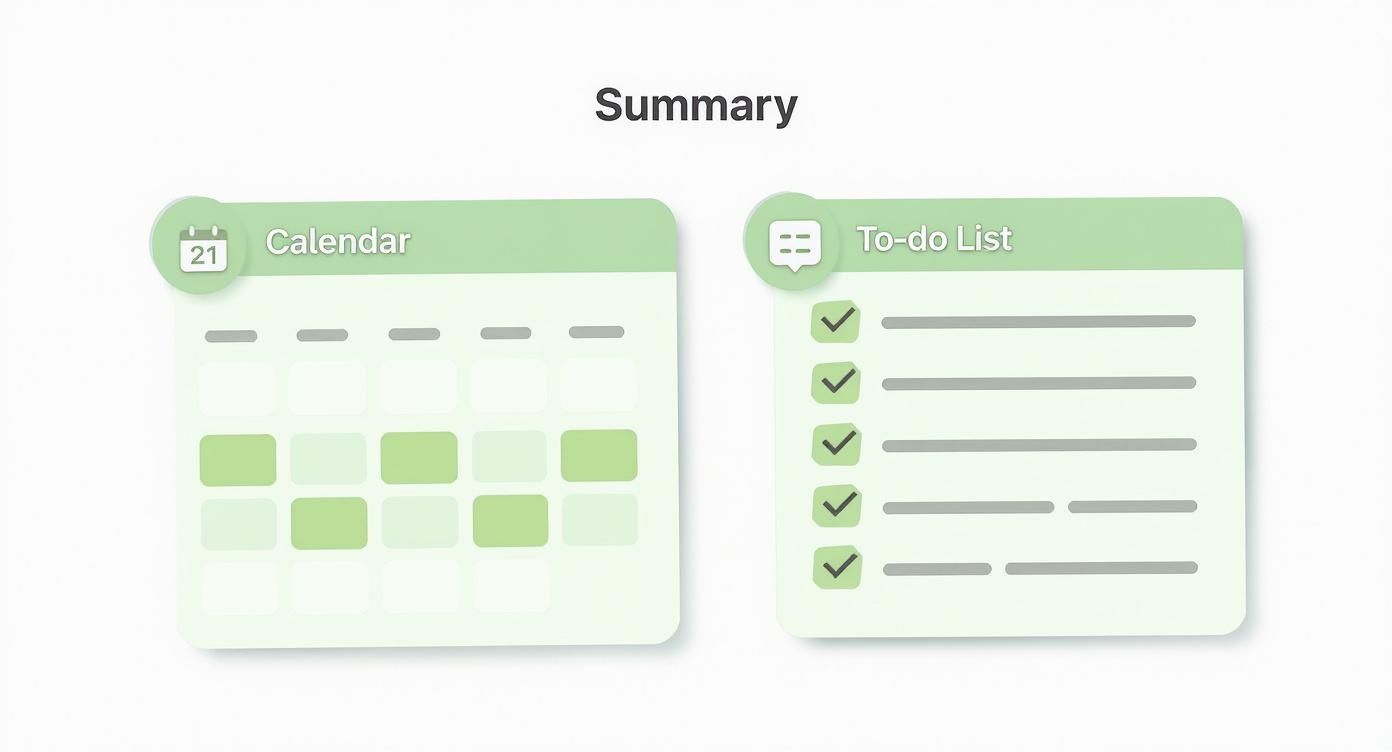
The key insight is that building a habit is a marathon, not a sprint. A calendar helps you see the entire journey, while a to-do list only shows you the next step.
The Power of Visual Data in Habit Formation
This visual-first approach is gaining serious traction for a reason. The global habit tracking apps market, which includes tools with a calendar habit tracker view, is projected to grow from USD 1.9 billion in 2025 to a massive USD 5.5 billion by 2033.
That growth is fueled by a simple truth: research suggests 72% of users report improved consistency when they use visual tracking tools. People stick with what they can see.
Unlike generic apps, Tracka is designed to give you exactly that—an immediate, at-a-glance overview of your commitment. It turns the vague idea of "being consistent" into a concrete daily action, giving you the visual proof of your hard work that becomes its own powerful motivator.
Designing Your First Habit Tracking System
A thoughtful setup can be the difference between a habit that sticks and one that fades after a week. The goal isn't just to track actions. It's about building a system that feels genuinely supportive and woven into your life, not like another demanding chore.
The most common mistake? Trying to change everything at once. Overloading your calendar with ten new habits is a fast track to burnout and abandoning your goals.
Instead, start by picking just 1-3 keystone habits. These are the small, foundational actions that create a positive ripple effect across your life. Think of a 15-minute walk after lunch—it doesn't just improve physical health; it can also sharpen your afternoon focus, lower stress, and improve sleep. You can explore more life-changing habits to track in your daily routine to find what clicks for you.
Choosing Your Core Habits
When picking those first few habits, ask yourself:
- Impact: Which small action would create the biggest positive shift in my energy, focus, or health?
- Feasibility: Can I realistically do this even on a busy or low-energy day?
- Alignment: Does this habit move me closer to my bigger goals for my career, health, or wellbeing?
Once you have your habits, it's time to set up your calendar tracker. In an app like Tracka, this is where you can make the system work for you. Set reminders that piggyback on your existing schedule—for example, a reminder to meditate right after your morning coffee, a time when you’re already settled.
A well-designed habit system acts as a scaffold for your intentions. It doesn't force you to be consistent; it makes consistency the easier and more obvious choice.
This tailored approach is why so many people—from health enthusiasts to busy professionals—are turning to these tools. With the rise of remote work, a well-configured calendar habit tracker is becoming essential for creating structure. You can dig into the specifics of this growing market on datainsightsmarket.com.
Making Your Calendar ADHD-Friendly
For brains that thrive on visual cues and can struggle with executive function, a standard calendar can feel rigid. Luckily, a few simple tweaks can make it incredibly effective.
- Color-Code Everything: Assign a unique color to each habit (e.g., green for fitness, blue for mindfulness, yellow for learning). This makes your calendar intuitive at a glance, providing a quick dopamine hit as you see the colors fill up the week.
- Use Gentle, Multiple Reminders: A single, jarring notification is easy to dismiss. Instead, set a series of gentle nudges. Tracka lets you customize this, so you could set a heads-up 10 minutes before, and another one right when you planned to start.
- Plan Your Week Visually: Don't just track what you've done—use your calendar to plan. Block out time for your habits just like a meeting. Seeing that dedicated space makes it feel like a real, non-negotiable commitment.
By focusing on a few powerful keystone habits and customizing your setup with supportive, visually engaging features, you create a system that's designed for success.
Mastering the Daily Check-In and Reflection

Lasting consistency isn’t built in grand, sweeping gestures. It’s forged in the small, intentional moments you carve out each day. With a calendar habit tracker, the two most critical moments are the quick morning check-in and the thoughtful evening reflection. These simple rituals turn your tracker from a passive scorecard into an active tool for self-awareness.
The morning check-in should be lightning-fast—60 seconds max. The goal is to log your progress, setting a positive, focused tone before the day’s distractions and poor habits drain your focus.
The Power of the Evening Look-Back
The end of the day is where the real learning happens. This is your chance to look at your calendar for more than just checkmarks; you’re looking for context. It’s the moment to move beyond what you did and start asking why.
Missed your workout? Don't just leave the box blank. Use a note-adding feature, like the one in Tracka, to jot down the reason. Maybe you were overscheduled, or maybe you felt drained from a rough night's sleep. This isn't about assigning blame; it's about gathering honest data.
Reframing 'failure' as 'feedback' is the single most important mindset shift you can make. An off-day isn't a moral failing; it's a data point showing you where your system needs a tweak.
This practice of brief, honest reflection is a form of lightweight journaling. It helps you connect the dots between your actions, environment, and energy levels. If you want to take this even further, learning how to start journaling can provide a powerful framework for turning these daily notes into profound personal insights.
Turning Feedback into Action
Over time, these little daily notes build a rich story about your habits. Here’s how to make that process practical:
- Connect the Dots: After checking off "Drank 2L of water," you might add a note like, "Felt way more focused in my afternoon meeting." This reinforces the habit by reminding you of the real-life impact.
- Identify Obstacles: If you skip meditation, a note might say, "Woke up late, no time." This isn't an excuse; it's a clear signal that your morning routine might need more buffer room.
- Acknowledge External Factors: Sometimes life just happens. Note things like, "Skipped the gym, had a brutal deadline." This helps you recognize patterns, like how work stress consistently derails your fitness goals.
When you embrace this simple cycle of action and reflection, your calendar habit tracker becomes more than a record of your streaks. It evolves into a personalized guide, showing you exactly what works, what doesn't, and how to adjust your approach for better life outcomes.
How to Read the Patterns in Your Calendar Data
After a few weeks of consistent check-ins, your calendar stops being just a simple log. It becomes a goldmine of personal data. This is where you shift from just doing the habits to truly understanding them. By learning to spot the patterns, you become a detective of your own behavior, ready to make smart adjustments that lead to sustainable change.
This isn't just a personal quirk; it's part of a massive trend toward data-driven self-improvement. The insights you pull from your calendar are part of a larger movement where people are using technology to get a clearer picture of their own lives.
The real power of your calendar tracker lies in the trends it reveals. Are you consistently skipping workouts on Wednesdays? Does your meditation habit fall off a cliff on weekends? Recognizing these recurring behaviors is the first step toward fixing the root cause. You're turning what feels like a random failure into a predictable problem you can solve.
Decoding Your Streaks and Setbacks
Let's be honest, streaks are incredibly motivating. Seeing that unbroken chain of checkmarks taps directly into our brain's reward system. It's visual proof that you're committed, and that becomes a powerful reason to show up even on days you don't feel like it.
But life happens, and streaks will break. The most important thing is how you respond. Instead of seeing a broken streak as a total failure, treat it as a single data point. An "all-or-nothing" mindset is the enemy of consistency. One missed day doesn't erase weeks of progress. The real goal is to get back on track immediately—never miss twice.
Your calendar isn't a tool for judgment; it's a tool for curiosity. Each mark, and each empty space, is a clue that helps you understand what truly drives your consistency.
From Raw Data to Actionable Advice with AI
Spotting these trends manually can be a chore, which is where modern tools add a powerful layer of insight. Unlike generic habit apps, an intelligent tool like Tracka does the detective work for you, using AI to automatically highlight patterns and connections you might have missed. It can point out that your focus tanks on days you skip your morning walk or that your energy is highest after a consistent week of staying hydrated.
This shift toward intelligent analysis is quickly becoming the new standard. In fact, over 50% of habit tracking apps now incorporate AI-driven analytics as users demand data-rich experiences. You can read more about the growth of AI in the habit tracking market on businessresearchinsights.com.
Instead of just showing you a calendar full of checkmarks, Tracka provides personalized insights and coaching to help you improve.
- Identifies 'Trigger' Days: It might notice you consistently miss habits on high-stress workdays and suggest a shorter, 5-minute version of your routine for those days.
- Highlights Positive Correlations: The AI can connect your best habits to positive outcomes, reinforcing the "why" behind your efforts (e.g., "When you meditate for 3+ days a week, your reported focus increases").
- Offers Proactive Adjustments: Based on your unique patterns, Tracka can recommend shifting a habit to a different time of day or breaking it into smaller, more manageable pieces.
By turning your raw data into actionable advice, this AI-driven approach helps you fine-tune your system based on your actual lifestyle, ensuring your efforts lead to better energy, focus, and overall wellbeing.
Using Gentle Accountability to Stay on Track
Going it alone is tough. Willpower is a finite resource, and it often runs empty. Research shows that having accountability makes you far more likely to succeed, but most people associate that word with pressure and judgment.
This is where your calendar habit tracker flips the script. It’s not about intense scrutiny; it’s about creating a system of gentle, supportive accountability that actually works.
The idea is to shift from high-pressure check-ins to simple, positive reinforcement. This isn't about someone watching your every move. It’s about sharing your wins with someone who’s in your corner, creating motivation that feels more like a high-five than a performance review.
From Surveillance to Support
Instead of feeling watched, you feel seen. It’s a small distinction, but it makes all the difference. This is the core of what we call “gentle social accountability.”
It works by making your progress visible to a trusted friend or a small group, turning your private efforts into a shared journey. Seeing your friend’s calendar fill up with checkmarks might be the nudge you need on a low-energy day. And knowing they can see yours provides just enough of a positive nudge to keep you going.
Suddenly, your calendar isn’t just a private log. It’s a shared story of showing up, day after day. The focus shifts from avoiding failure to celebrating small, consistent wins together.
Accountability doesn't have to feel like a performance review. When done right, it's a collaborative system that provides encouragement when your internal motivation is running low, helping you stay consistent long enough for the habit to become automatic.
How to Create Your Accountability System
Building this supportive setup is surprisingly simple. Tracka’s community features are designed for exactly this, letting you share your progress without adding stress.
Here’s a practical way to get started:
- Find a Partner or Small Group: Team up with one or two people who share your goals. It could be a friend you want to go to the gym with or a coworker who also wants to build a better focus routine.
- Use a Simple Script to Ask: Don't overthink it. A quick text is all you need. Try something like, "Hey, I'm trying to be more consistent with [Habit] and I'm using a calendar tracker to see my progress. Would you be up for sharing our streaks to keep each other motivated? No pressure, just encouragement!"
- Share Your Progress Visually: In Tracka, you can share a snapshot of your calendar view or your streak progress. A picture of a filled-out calendar is often more powerful than just saying, “I did my habit.”
- Establish a Positive Check-In Rhythm: Agree on a low-effort way to acknowledge each other’s progress. A quick emoji reaction or a short message like "Nice work on the 5-day streak!" is all it takes to provide that boost of reinforcement.
By using a community-driven approach, you create an effortless system where you feel supported, not surveilled. That simple shift makes it so much easier to turn good intentions into habits that actually last.
Got Questions About Calendar Habit Tracking?
Jumping into any new system brings up questions. When it comes to using your calendar to track habits, a few common roadblocks can feel like a big deal if you're not ready for them. Let's walk through those challenges so you can turn your tracker into a tool that drives consistency.
"I Missed a Day and Broke My Streak. Now What?"
This stings. Breaking a long streak can feel like a total failure, but it’s a normal part of building any new habit. The biggest mistake you can make is falling into the "all-or-nothing" trap, where one missed day makes you feel like all your past effort is worthless.
That single empty box on the calendar doesn't erase your progress. It's just a data point.
Instead of letting it throw you off course, use it as a chance to learn. Ask yourself: Why did I miss that day? Was the goal too ambitious? Did I overcommit myself?
Now, focus on the single most important rule: never miss twice. One day is a blip; two days is the start of an unwanted pattern. Get right back to it the next day. An app like Tracka is great for this because it shifts the focus from perfect, unbroken streaks to your overall consistency, reframing a miss as feedback, not failure.
"How Many Habits Should I Track at Once?"
When you first get started, it’s tempting to overhaul your entire life at once. But trying to track a dozen new habits is the fastest way to burn out and abandon your resolutions completely.
The best approach? Start small. Really small. Choose just 1-3 keystone habits to put on your calendar. These are the small, foundational actions that create a positive ripple effect in other areas of your life—think a 10-minute walk after lunch, or laying out your clothes the night before.
Once those habits start feeling automatic (which can take a couple of months), you can gradually add another one. A well-designed app like Tracka lets you organize and prioritize your habits, so your calendar feels focused and manageable, not cluttered and overwhelming. It’s all about building momentum without the pressure.
"Is a Digital Calendar Tracker Better Than Paper?"
There's no denying the tactile satisfaction of checking off a box on a paper calendar. For some people, that’s a real motivator. But a digital calendar habit tracker brings serious advantages that paper just can't compete with, especially for building long-term consistency.
For one, a digital tool like Tracka is always on your phone, making it easy to log progress wherever you are, whether you're tracking fitness, nutrition, screen time, or personal growth. But the real power comes from the features that help habits stick:
- Automated Reminders: Gentle nudges that fit into your daily flow.
- Data Analysis: AI-powered insights that spot patterns in your behavior you’d never see on your own.
- Social Accountability: The option to share progress with friends for extra encouragement.
- Health Integrations: The ability to connect with other apps to track activity automatically.
While a paper system has a certain simplicity, a digital tracker gives you the data, support, and personalized insights needed to understand your behavior and achieve better life outcomes.
Ready to build a system that turns your intentions into consistent actions? Tracka makes habit change achievable by combining the visual power of a calendar with AI-powered insights and social accountability to help you build habits that last. Start tracking with Tracka today and discover what you're truly capable of.


