

The appeal of a fresh bullet journal is universal: crisp pages, a new pen, and the promise of a more organized, intentional life. We meticulously design layouts, yet statistics show a harsh reality: up to 80% of personal resolutions are abandoned within weeks. The gap isn't a lack of desire, but a struggle with consistency. Distractions, overwhelm, and the simple friction of daily life can quickly turn a beautiful paper tracker into a source of guilt rather than progress.
This guide is built for action, not just aesthetics. We'll explore a comprehensive list of powerful bullet journal tracker ideas, breaking down their psychological benefits and offering practical, actionable implementation details. From monitoring mood and managing finances to tracking sleep and building a fitness routine, each idea is a stepping stone toward tangible life improvements—more energy, reduced stress, and better performance. These trackers are more than just charts; they are tools for self-awareness that reveal patterns, celebrate small wins, and illuminate the path to your goals.
More importantly, we bridge the gap between analog intention and digital consistency. While the principles of bullet journaling are powerful, maintaining a physical notebook isn't always practical. We'll show you how to translate the core concept of each tracker into a streamlined, portable system using an app like Tracka. Unlike generic habit apps, Tracka provides personalized, AI-powered insights and a community-driven approach that helps people stick to their routines. This dual approach ensures your habits stick, whether you're at your desk or on the go, transforming your aspirations into sustainable, everyday routines.
1. The Classic Habit Tracker: Building Your Consistency Engine
The classic habit tracker is the cornerstone of many bullet journals for a simple reason: it works. This systematic method uses a grid layout to monitor daily or weekly habits, turning the abstract goal of "being consistent" into a tangible, visual record. At its core, it leverages the powerful "don't break the chain" principle. Each day you complete a habit, you mark it off, creating a visual chain of success that you become motivated to protect.
This approach is highly effective because it provides immediate positive reinforcement. Seeing a row of checkmarks offers a small but satisfying reward, reinforcing the behavior and making you more likely to repeat it. This visual feedback loop is one of the most powerful bullet journal tracker ideas for building momentum, which is critical since most people struggle with consistency.
How to Implement It
Creating a classic habit tracker is straightforward. First, list the 3-5 habits you want to focus on down the left side of your page. Then, create a grid with columns for each day of the month. As you complete each habit, fill in the corresponding box.
- Marking System: Use a simple
X, a checkmark (✓), or a colored-in box to signify completion. - Examples: This format is perfect for tracking daily goals like a 30-day fitness challenge, a meditation practice, reading 10 pages, or hitting your water intake goal.
- Placement is Key: Keep your tracker on a page you see daily, such as your weekly or monthly spread, to ensure it stays top-of-mind.
Pro-Tip: Review your tracker at the end of each week. This isn't about judging yourself for missed days; it's about gathering data. You might notice you consistently skip your morning workout on Thursdays, prompting you to investigate why and adjust your schedule accordingly.
Digital Adaptation in Tracka
This classic grid translates perfectly into a digital format. Apps like Tracka are designed to make habit change achievable by creating the same "don't break the chain" effect with automated streaks and visual progress reports.
- Setup: Add your 1–3 core habits (e.g., "Meditate," "Drink Water," "Read") into the Tracka app.
- Workflow: Instead of manually drawing a grid, you simply tap to log completion each day. The app builds the visual streak for you, providing the same motivational boost without the setup time. You can learn more about how long it takes for these actions to become automatic by exploring the science behind habit formation. This makes it an ideal, low-friction alternative for busy professionals or those who benefit from digital reminders and streamlined systems.
2. Water Intake Tracker: Your Hydration Health Dashboard
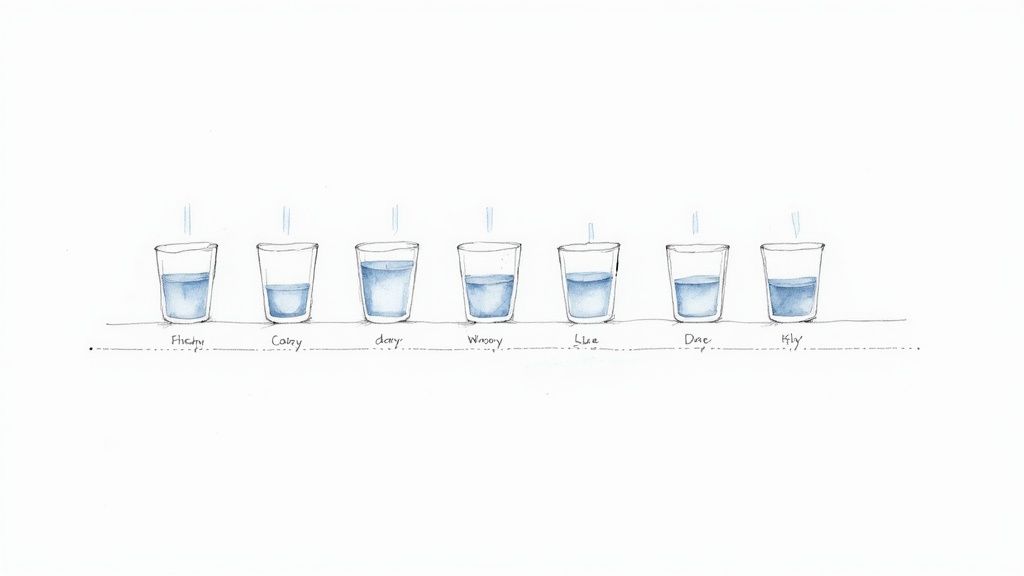
Staying hydrated is fundamental to focus, energy, and overall health, yet it's a daily goal many of us overlook. A dedicated water intake tracker acts as your personal hydration dashboard, transforming the simple act of drinking water into a visible and motivating daily achievement. By visually representing each glass, you create a powerful feedback loop that encourages you to meet your hydration targets consistently.
This tracker is more than a checklist; it's a tool for building a keystone health habit that leads to better life outcomes. Proper hydration is linked to improved cognitive function, physical performance, and mood regulation. Monitoring your intake helps you connect the dots between how much you drink and how you feel, making it one of the most impactful bullet journal tracker ideas for immediate wellness benefits.
How to Implement It
Setting up a water tracker is simple and highly customizable. The most common method involves drawing a series of icons, like droplets or glasses, for each day of the month. As you drink, you color in an icon, giving you an at-a-glance measure of your progress.
- Marking System: Use small icons like droplets, glasses, or bottles. Color them in with a blue pen or highlighter as you drink. For a minimalist approach, a simple tally mark system works just as well.
- Examples: Create a monthly tracker with 8 droplets to color in each day, track ounces to align with a specific fitness goal, or design a weekly hydration challenge to build momentum.
- Placement is Key: Keep your tracker in your daily log or a dedicated health page. Placing it somewhere visible, like next to your to-do list, serves as a constant, gentle reminder.
Pro-Tip: Note the time of day you drink water to identify patterns. You might realize you're dehydrated in the afternoon or need more water before a workout. Use this data to set timed reminders on your phone, creating a supportive system to stay on track.
Digital Adaptation in Tracka
For those who need automated reminders and zero setup, a digital app is the perfect solution. Tracka simplifies hydration tracking by removing the manual effort of drawing and filling in a journal, making consistency effortless whether you're tracking fitness, nutrition, or screen time.
- Setup: Add "Drink Water" as one of your core habits in the Tracka app and set your daily goal (e.g., 8 glasses or 64 ounces).
- Workflow: Log each glass with a single tap. The app visualizes your progress automatically, building streaks that motivate you to stay hydrated day after day. This streamlined process is especially beneficial for busy professionals who thrive on low-friction systems and digital cues to maintain healthy routines.
3. The Mood Tracker: Mapping Your Emotional Landscape
A mood tracker is a powerful tool for emotional wellness that helps you visualize and understand your daily emotional patterns. By logging your feelings, you create a data-rich map of your mental state, which can reveal connections between your habits, environment, and overall well-being. This practice transforms the often-abstract nature of emotions into a concrete, analyzable record, making it one of the most insightful bullet journal tracker ideas for personal growth.
This method is effective because it fosters self-awareness and emotional intelligence. Regularly checking in with yourself creates a moment of mindfulness, helping you identify triggers and understand what truly lifts you up or brings you down. Over time, this visual data can empower you to make more intentional choices that support your mental health—a key factor in achieving a balanced lifestyle.
How to Implement It
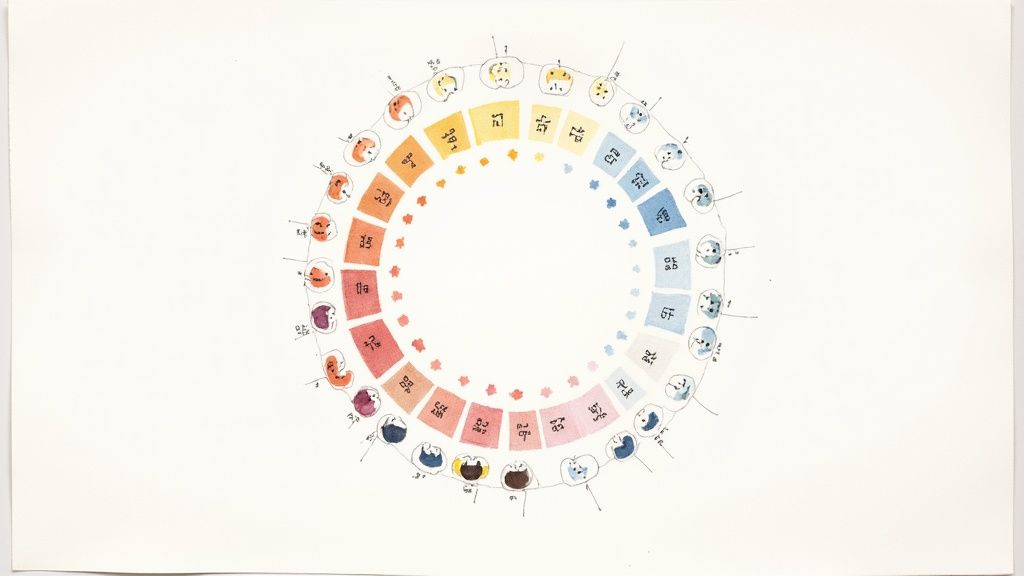
To start a mood tracker, dedicate a page in your journal and choose a format that resonates with you. Many people use a "year in pixels" layout, a monthly calendar, or a simple chart. The key is to create a legend that links colors, symbols, or numbers to specific emotional states.
- Marking System: A color-coded key is most common (e.g., yellow for happy, blue for sad, red for angry, green for calm). Alternatively, you can use emoji faces or a 1-5 rating scale.
- Examples: Track your mood alongside other key variables like sleep quality, stress levels, or significant daily events. For instance, note if a stressful meeting at work corresponded with an anxious evening.
- Context is Crucial: Add a small space for notes next to your daily entry. Jotting down a few words about why you felt a certain way provides invaluable context when you review your patterns later.
Pro-Tip: Review your mood tracker at the end of each month. Look for recurring patterns. Do you consistently feel more positive on weekends? Does a lack of sleep correlate with low moods? This data is incredibly useful for making lifestyle adjustments or discussing with a therapist.
Digital Adaptation in Tracka
Translating a mood tracker into a digital tool like Tracka streamlines the process and enhances its analytical power. Instead of drawing grids, you can log your emotional state with a simple tap, connecting it directly to your core habits.
- Setup: In Tracka, use the notes feature alongside one of your 1–3 core habits (like "Daily Reflection" or "Mindfulness") to log your mood.
- Workflow: At the end of each day, check off your "Daily Reflection" habit and add a quick note describing your mood (e.g., "Feeling energized after workout" or "Stressed, long day at work"). The app’s AI-powered insights will help you see how your habits directly influence your emotional well-being over time. This makes it an excellent, low-friction method for busy professionals who benefit from data-driven insights.
4. The Expense/Budget Tracker: Mastering Your Financial Flow
A budget tracker is one of the most empowering bullet journal tracker ideas for gaining control over your finances. It moves financial planning from a place of anxiety and guesswork to one of clarity and intention. By documenting daily spending, you create a detailed visual map of where your money goes, making it easier to align your habits with your long-term financial goals. This is about more than just restriction; it’s about mindful spending and directing your resources toward what truly matters.
This tracker works by making the invisible visible. Daily purchases often feel small, but a budget tracker aggregates them into clear patterns. Seeing a visual breakdown of your spending provides the concrete data needed to make informed decisions. It transforms abstract goals like "save more money" into actionable steps, demonstrating how better habits lead to better life outcomes.
How to Implement It
Setting up a financial tracker can be as simple or as detailed as you need. Start by defining your main budget categories based on your lifestyle (e.g., groceries, transport, entertainment, bills). Then, create a layout to log expenses as they happen or during a weekly review.
- Layouts: Popular formats include a simple two-column log (Date/Item and Amount), a category-based monthly budget with spending caps, or a visual savings goal tracker shaped like a jar or mountain that you color in as you save.
- Examples: Track daily spending to prepare for a large purchase, monitor your food budget to reduce waste, or use an envelope-style layout to allocate cash for different categories.
- Color-Coding: Assign a specific color to each spending category (e.g., green for groceries, blue for bills) to quickly visualize where most of your money is going at a glance.
Pro-Tip: Review your budget weekly, not just monthly. This allows you to catch overspending early and adjust your habits for the rest of the month, preventing small deviations from derailing your entire financial plan.
Digital Adaptation in Tracka
Financial health is built on consistent habits, like checking your accounts or avoiding impulse purchases. While Tracka isn't a budgeting app, it's the perfect tool for building the core behaviors that support your financial goals.
- Setup: Create 1-3 key financial habits in Tracka, such as "Log Daily Expenses," "No Spend Day," or "Review Weekly Budget." These are the foundational actions that make any budget successful.
- Workflow: Instead of tracking every dollar in the app, you track the actions that lead to financial control. Tapping to log "Review Weekly Budget" each Sunday builds the consistency muscle. This approach is ideal for those who find detailed financial logging overwhelming but want to build better money habits that stick.
5. The Sleep Tracker: Unlocking Your Daily Energy Potential
A sleep tracker is one of the most impactful bullet journal tracker ideas for boosting well-being and productivity. It moves beyond simply noting when you go to bed and transforms your sleep into a data-rich resource. By monitoring hours, quality, and related factors, you can identify hidden patterns that dictate your energy, mood, and focus levels the next day. This tracker helps you connect the dots between your daily actions and their nighttime consequences.
This approach is highly effective because it makes the invisible visible. You might feel tired, but a sleep tracker can show you why: maybe it’s the late-afternoon coffee or a stressful evening routine. It provides clear, objective feedback on one of the most crucial pillars of health, turning guesswork into actionable insight and empowering you to make targeted changes for a more restorative night.
How to Implement It
A sleep tracker can be as simple or as detailed as you need. Start by dedicating a section of your monthly spread to it. List the dates of the month vertically, and create columns for the key metrics you want to monitor, such as bedtime, wake-up time, total hours slept, and a quality rating from 1 to 5.
- Tracking System: Use a line graph to visualize the hours you sleep each night, or use a color-coding system to quickly assess sleep quality (e.g., dark blue for great sleep, light yellow for poor sleep).
- Examples: Track your total hours slept against your energy level the next day. Note factors like "late-night screen time" or "evening workout" to see how they correlate with your sleep quality.
- Placement is Key: Keep it near your daily log or habit tracker. Filling it out first thing in the morning ensures the details are fresh and accurate.
Pro-Tip: Don't just collect data; analyze it. At the end of each week, look for patterns. Do you sleep better on days you exercise? Does a specific bedtime lead to a higher quality rating? Use these insights to build a better evening routine and protect your sleep.
Digital Adaptation in Tracka
Manually logging sleep can be tedious. Digital apps like Tracka streamline this process, making it a frictionless part of your routine while automatically identifying trends.
- Setup: Create a habit in Tracka called "7+ Hours of Sleep." You can add notes to specify the exact time or quality.
- Workflow: Simply tap to log your successful night's sleep. Tracka builds the streak and visualizes your consistency over time. Its AI-powered insights can even show how habits like "No Caffeine After 2 PM" or "Evening Wind-Down" support your primary sleep goal. This digital approach is perfect for busy professionals who need quick logging and automated insights to optimize their performance.
6. Gratitude/Appreciation Tracker: Cultivating a Positive Mindset
The gratitude tracker shifts focus from "doing" to "being," serving as a powerful tool for mindfulness and mental well-being. Instead of tracking actions you've completed, this practice encourages you to notice and record the positive aspects of your life. This evidence-based method is designed to rewire your brain to recognize and appreciate the good, fostering resilience and reducing stress.
This approach is one of the most impactful bullet journal tracker ideas because it directly counters our natural negativity bias. By intentionally documenting moments of appreciation, you create a tangible record of joy and contentment. This simple act provides an immediate emotional lift and builds a personal library of positive memories you can revisit during challenging times, reinforcing a more optimistic and resilient outlook.
How to Implement It
Creating a gratitude tracker is flexible and deeply personal. The goal is to create a space to jot down 1-3 things you're thankful for each day. You can dedicate a full page for the month with a line for each day, or integrate it into your daily or weekly spreads.
- Entry Styles: Use simple bullet points, one-word entries ("sunshine," "coffee," "laughter"), or small doodles to represent what you appreciate.
- Examples: A classic approach is the "Three Good Things" practice, where you list three specific positive moments from your day. Other examples include tracking compliments you received, beautiful things you saw on a walk, or a person you're thankful for.
- Be Specific: Instead of just writing "family," specify why. For example, "Grateful for my sister calling to check in on me." This detail makes the memory more potent.
Pro-Tip: Focus on sensory details to deepen the practice. What did you see, hear, or feel in that moment of gratitude? Recording these specifics makes the memory more vivid and emotionally resonant when you look back on it.
Digital Adaptation in Tracka
A gratitude practice translates seamlessly into a digital journaling habit, removing the friction of pen and paper. Using an app like Tracka allows you to build this reflective routine with minimal effort, making it ideal for busy professionals who thrive on streamlined systems.
- Setup: Create a single, simple habit in Tracka named "Daily Gratitude" or "Log 3 Good Things."
- Workflow: When you get your daily reminder, simply tap to confirm you've completed your reflection. Use the app's notes feature to quickly type out your thoughts. This creates a digital archive of positivity you can easily access and review. This practice complements other self-discovery exercises, and you can find more inspiration with these journaling prompts for self-growth.
7. Fitness/Exercise Tracker: Visualizing Your Physical Progress
A fitness and exercise tracker goes beyond a simple "workout" checkbox; it's a dedicated log for monitoring physical activity with intention. This tracker allows you to record key details like workout type, duration, and personal bests, transforming abstract fitness goals into concrete data. By visualizing your efforts, you create a powerful feedback loop that highlights progress, identifies patterns, and keeps you engaged with your wellness journey.
This method is especially effective because it provides a clear, objective record of your hard work. When motivation wanes, looking back at a page filled with completed workouts can be the push you need to keep going. It shifts the focus from a single session to long-term consistency, making it one of the most impactful bullet journal tracker ideas for building a sustainable fitness routine and boosting your energy.
How to Implement It
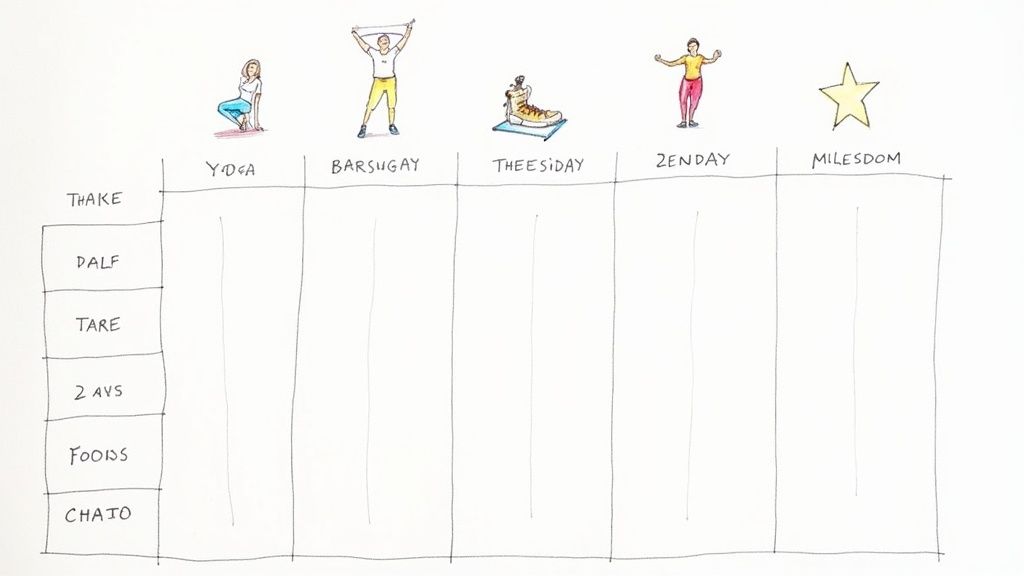
Start by defining what you want to track. Are you focused on total active minutes, specific types of exercise, or hitting a certain number of workouts per week? Your layout can be a simple weekly checklist, a detailed log, or a monthly overview.
- Marking System: Use color-coding for different activities (e.g., yellow for running, blue for yoga, green for weightlifting). Symbols like a star (★) or "PB" can denote personal bests.
- Examples: Track a 7-day workout schedule with checkboxes, log daily activity with columns for "Type," "Duration," and "Notes," or create a monthly calendar to color in every day you're active.
- Rest Days: Intentionally schedule and mark rest days. This reframes them as a crucial part of your routine, not a failure to exercise.
Pro-Tip: Review your tracker monthly to celebrate your consistency and spot trends. Did you exercise more on weeks when you also got enough sleep? Use these insights to optimize your schedule and reinforce the behaviors that support your fitness goals.
Digital Adaptation in Tracka
A digital tracker simplifies logging and automates progress visualization, making it ideal for busy schedules. Tracka helps you focus on the core habit of showing up, reducing the friction of detailed manual entry.
- Setup: Add 1–3 core fitness habits to Tracka, such as "30 Min. Workout," "Morning Run," or "Yoga Practice."
- Workflow: Log your activity with a single tap. The app automatically builds your consistency streak, giving you instant positive feedback. This streamlined process helps preserve mental energy, which is essential for maintaining self-discipline. You can explore a deeper understanding of the science behind willpower and self-control to see how simplifying your tracking system can lead to better results.
8. Reading/Learning Tracker: Charting Your Intellectual Journey
A reading or learning tracker transforms your intellectual pursuits from a passive hobby into a measurable and celebrated achievement. This tracker acts as a personal library, documenting everything from books and articles read to online courses completed. By logging titles, progress, and key insights, you create a tangible record of your mental growth, making the often-invisible work of learning visible and motivating.
This method is powerful because it gamifies learning and provides a clear sense of accomplishment. Instead of feeling like you're just consuming content, you're actively building a knowledge base. Reviewing a year's worth of reading provides immense satisfaction and helps you identify patterns in your interests, solidifying your identity as a lifelong learner. It’s one of the most rewarding bullet journal tracker ideas for anyone focused on personal development.
How to Implement It
Start by dedicating a single or double-page spread to your tracker. A common and visually appealing layout is a bookshelf, where you write the title on a book spine once you've finished it. Alternatively, a simple list or table format works perfectly.
- Tracking System: Create columns for the title, author, start/finish dates, and a personal rating (e.g., a 1-5 star system). You can also add a small space for key takeaways or a favorite quote.
- Examples: Track progress toward an annual reading goal (e.g., 52 books in 52 weeks), monitor completion of a professional certification course, or simply log insightful articles you’ve read online.
- Color-Coding: Assign different colors to different genres (e.g., blue for non-fiction, yellow for fantasy, green for personal development) to get a quick visual summary of your reading habits.
Pro-Tip: Don't be afraid to log books you "Did Not Finish" (DNF). Tracking what doesn't resonate is just as valuable as tracking what does. It helps you understand your preferences better and saves you from forcing your way through content you don't enjoy.
Digital Adaptation in Tracka
While a physical bookshelf spread is charming, a digital tracker offers a more streamlined way to log progress, especially for on-the-go learning. Tracka simplifies this by focusing on the core, daily action.
- Setup: Create a single, powerful habit like "Read for 20 Minutes" or "Study for 30 Minutes" in the Tracka app. This removes the pressure of finishing a whole book and focuses on building the daily learning ritual.
- Workflow: Each time you complete your session, tap to log it in Tracka. The app builds your consistency streak, reinforcing the daily practice of learning. You can use the notes feature to jot down the book title or a key insight from your session, creating a simple, effective log over time. This approach is ideal for busy professionals or students who want to make learning a non-negotiable part of their routine.
8 Bullet Journal Trackers Compared
| Tracker | Implementation (🔄 Complexity) | Resources & Time (⚡ Efficiency) | Expected outcomes (⭐ Quality) | Ideal use cases (📊 Impact) | Key advantages & tips (💡) |
|---|---|---|---|---|---|
| Habit Tracker | Low — grid-based, easy setup | Minimal daily input; quick marks | More consistent habits via visual streaks | Daily routines (meditation, reading, small habits) | Highly motivating; tip: limit to 3–5 habits, place in view |
| Water Intake Tracker | Very low — unit-based marking | Multiple quick updates/day; use reminders | Better hydration awareness and energy | Hydration goals, fitness days, health tracking | Satisfying visuals; tip: keep tracker near drinking area |
| Mood Tracker | Low–Medium — color/emoji scale + notes | Daily brief entry; needs honesty | Increased emotional self-awareness and pattern detection | Mental health monitoring, therapy, mood cycles | Identifies triggers; tip: update same time, add context notes |
| Expense/Budget Tracker | Medium — requires categorization & totals | Moderate weekly time; receipts or app sync | Improved financial awareness and spending control | Monthly budgets, savings goals, expense audits | Promotes accountability; tip: realistic categories, weekly review |
| Sleep Tracker | Low — record times & quality; optional details | 2–3 minutes/day; wearables optional for accuracy | Better sleep hygiene; identify disruptors | Sleep improvement, correlating sleep with mood/performance | Tracks patterns; tip: record upon waking and review 2–4 weeks |
| Gratitude/ Appreciation Tracker | Very low — short daily entries | 2–5 minutes/day; minimal materials | Increased well‑being, reduced stress, greater resilience | Mindfulness practice, mood boosting, difficult periods | Shifts mindset; tip: be specific, review past entries when down |
| Fitness/ Exercise Tracker | Medium — categorize type, duration, intensity | 5–10 minutes/week; devices optional for metrics | Improved consistency, progress and performance gains | Training plans, goal-driven fitness, milestone tracking | Motivating progress visuals; tip: include rest days and PBs |
| Reading/ Learning Tracker | Low–Medium — log titles, pages, takeaways | 5–15 minutes per book + quick ongoing updates | Consistent reading, better recall and learning progress | Reading goals, course tracking, lifelong learning | Builds record and retention; tip: write short reviews, track DNF |
Build a System That Works: Go Beyond the Page with Tracka
We've explored a comprehensive landscape of bullet journal tracker ideas, from foundational habit trackers to specific logs for fitness, reading, and financial wellness. Each template serves as a powerful tool for self-awareness, turning abstract goals into tangible progress on a page. The act of physically drawing a mood mandala or filling in a sleep log creates a moment of mindful reflection, connecting you directly to your intentions. This manual process is the heart of bullet journaling; it’s where you design the blueprint for a more intentional life.
The true challenge, however, isn't designing the perfect tracker. It's maintaining momentum day after day. Statistics show that around 80% of new habits are abandoned, not for a lack of desire, but for a lack of a sustainable, low-friction system. A beautiful paper tracker is an incredible starting point, but it's a static tool. It can't send you a reminder, analyze your data for hidden patterns, or offer a boost of encouragement when you need it most. This is where your analog intentions meet digital execution.
From Blueprint to Lasting Change
Think of your bullet journal as the architect's plan: thoughtful, detailed, and deeply personal. It's where you define what you want to build. But to bring that vision to life, you need a dynamic and supportive construction crew. This is the role Tracka plays. It closes the critical gap between planning and doing, transforming your beautiful designs into consistent, real-world action.
Instead of being another task to complete, your tracking system should feel effortless and integrated into your daily flow.
- For the Busy Professional: Manually updating multiple trackers at the end of a long day can feel like a chore. Tracka automates data collection and analysis, allowing you to log habits in seconds and get instant feedback without the manual effort.
- Personalized Insights: A paper journal shows you that you missed your water intake goal, but it can't tell you why. Tracka's AI-powered insights can identify correlations you might miss, like noticing your sleep quality dips on days you skip your evening meditation.
- Community and Accountability: Unlike going it alone with a paper journal, Tracka’s community-driven approach provides social accountability, a proven factor in helping people stick to routines long-term.
Actionable Steps to Integrate Your Systems
You don't have to choose between your beloved bullet journal and a digital app. The most effective systems are hybrid, leveraging the unique strengths of both. Use your journal for big-picture planning and reflection, and use Tracka for the high-frequency, in-the-moment execution.
- Weekly Intentions: Use your bullet journal at the start of each week to set your 1–3 core priorities. These become the primary habits you load into Tracka for daily tracking.
- Daily Execution: Rely on Tracka for the daily grind. Use its reminders and simple interface to log your water, exercise, or focus time as it happens.
- Monthly Review: At the end of the month, use the data and trend reports from Tracka to inform your monthly review in your bullet journal. This creates a powerful feedback loop: digital data informs your analog reflection, which in turn sharpens your digital goals for the next cycle.
By pairing the mindful intentionality of bullet journaling with the intelligent, effortless execution of Tracka, you create a holistic system that supports every stage of habit formation. You get the creative and reflective benefits of paper, combined with the power of AI-driven insights and social accountability. This integrated approach ensures your meticulously planned bullet journal tracker ideas don't just stay on the page; they become the lived, breathing reality of your best life.
Ready to turn your beautifully planned trackers into unbreakable daily habits? Download Tracka.AI | Habit Tracker App and experience the power of a system that combines mindful planning with smart, effortless execution. Bridge the gap between your paper journal and your daily actions today.


