

An ADHD chore chart isn't just a to-do list; it's a visual tool specifically designed to work with the ADHD brain, not against it. A good one breaks down household tasks into manageable steps and offers clear structure, but it’s also flexible, visually interesting, and taps into the brain’s need for novelty and immediate feedback.
Why Traditional Chore Charts Overwhelm ADHD Brains
Have you ever looked at a perfectly organized chore chart, felt a wave of paralysis wash over you, and just walked away? You are definitely not alone. The problem isn’t a lack of willpower; it’s a fundamental mismatch between the tool and the way your brain is wired.
Most chore charts are built for neurotypical brains. They rely on linear lists and rigid schedules—two things that can instantly shut down an ADHD mind. This struggle is deeply rooted in challenges with executive function, which is basically the brain's command center for planning, organizing, and actually starting tasks. To really get why a simple checklist often backfires, it helps to understand what is executive function and how it shows up in daily life.
For someone with ADHD, a long list of chores isn't a helpful guide. It’s a wall of demand that triggers overwhelm and an immediate urge to avoid it.
The Science Behind the Struggle
The real issue is how the ADHD brain handles information and motivation. Several key challenges can turn a seemingly simple chore chart into an unclimbable mountain:
- Task Initiation: The mental energy it takes to just start something can feel enormous. A vague task like "Clean Kitchen" is so big and undefined that it feels impossible to even begin.
- Working Memory: Trying to hold a multi-step chore in your head is a recipe for frustration. You might start one part, only to find the other steps have completely vanished from your mind.
- Time Blindness: People with ADHD often struggle to accurately estimate how long a chore will take. This makes it incredibly easy to put off tasks that seem like they'll take forever (even if they won't).
- Out of Sight, Out of Mind: If the chart isn't right in your line of sight, it might as well not exist. A piece of paper stuck on the fridge quickly fades into the background and becomes invisible.
This struggle with consistency isn't unique to chores; it's a global challenge. Research shows a staggering 80% of people abandon their New Year's resolutions, often because their methods lack the structure and positive feedback needed to build real momentum.
That "stuck" feeling isn't laziness. It's the brain's natural response to an overwhelming list of undefined tasks, where each one demands a huge amount of mental effort just to get started.
This is exactly why a new approach is needed—one that goes beyond static, boring lists. Modern digital tools like Tracka are built to tackle these specific points of failure. Unlike generic apps, Tracka combines habit tracking with AI-powered insights and community accountability, making consistency feel genuinely achievable.
In the same way, finding the best planner for ADHD adults means choosing a system that supports your brain’s unique wiring instead of trying to force it into a neurotypical box. The goal is to build a system that delivers clarity, reduces friction, and makes taking that first step feel easy.
Designing Your ADHD-Friendly Chore System
Okay, let's build a chore system that actually clicks. Forget those generic templates that seem designed for someone else's brain. Our goal here is to create a visual, interactive, and flexible chore chart that works with your unique wiring, not against it.
The secret? We have to stop thinking in terms of big, overwhelming tasks and start breaking things down into clear, bite-sized actions.
A vague chore like “Clean the Kitchen” is an executive function nightmare. It has no clear beginning or end, which makes it incredibly easy to put off until "later." So, we deconstruct it into micro-tasks—tiny, specific actions that only take a few minutes each.
For example, "Clean the Kitchen" can become:
- Wipe down counters
- Load and start the dishwasher
- Take out the trash and recycling
- Sweep the floor
Each one of these is a small, satisfying win. Checking it off gives your brain a little hit of dopamine, which makes starting the next small step feel so much easier. This approach is a direct counter to the paralysis that often comes with staring down a huge, undefined project.
Make Your Chore Chart Visual And Interactive
The "out of sight, out of mind" struggle is very real for ADHD brains. If your system isn't visually engaging and right in your face, it will quickly fade into the background noise of daily life. This is why we have to think beyond a simple list on a piece of paper.
A whiteboard command center is a classic for a reason. Stick it in a high-traffic spot—like the kitchen or by the front door—to keep tasks top of mind. You can even use different colored markers to categorize chores by room, priority, or the amount of energy they demand. Think blue for low-energy tasks (like sorting mail) and red for high-energy ones (like vacuuming).
Another fantastic strategy is to flip the script with a “Done” list. Instead of just focusing on what’s left to do, you physically move a completed task card or magnet over to a "Done" column. This creates a tangible, visual record of your accomplishments, which is way more motivating than watching a to-do list slowly shrink.
When you're building your physical system, it's worth finding tools that genuinely resonate with you. You can explore some of the best planners for ADHD brains to find layouts that offer real-world support and inspiration.
This next diagram shows exactly why a standard, long list of chores is basically designed to fail. It's a perfect illustration of how quickly that wall of text leads to shutdown.

As you can see, without breaking those tasks down, the system is rigged for failure before you even begin. It just confirms that a personalized, brain-friendly approach is the only way forward.
To help you design your chart, here's a breakdown of the key elements that make a real difference for an ADHD brain.
ADHD Chore Chart Design Elements
This table outlines the essential components of a chore chart that works, explaining why each feature helps and how you can put it into practice.
| Component | Why It Works for ADHD | Example Implementation |
|---|---|---|
| Micro-Tasks | Reduces overwhelm by breaking down large, vague chores into small, achievable steps. Provides quick dopamine hits. | Instead of "Clean Bathroom," use "Wipe Sink," "Clean Toilet," and "Take Out Trash." |
| Visual Cues | Combats "out of sight, out of mind." A visible system serves as a constant, gentle reminder without nagging. | A large whiteboard in the kitchen, or colorful sticky notes on a dedicated wall space. |
| Interactivity | Engaging physically with the chart (moving magnets, checking boxes) makes the process more stimulating and satisfying. | Use magnets or Velcro task cards that you can move from a "To-Do" column to a "Done" column. |
| Color-Coding | Helps organize information visually, making it easier to process at a glance. Can be used to signal priority or energy level. | Use red markers for urgent tasks, blue for low-energy tasks, and green for weekly routines. |
| "Done" Section | Shifts focus from the remaining work to accomplishments, which is highly motivating and builds momentum. | A dedicated space on your chart labeled "Done!" where you place completed task cards. |
| Flexibility | Allows for adjustments based on energy levels, changing priorities, and "off" days, preventing an all-or-nothing mindset. | Include a "Maybe" or "Bonus" section for tasks that aren't critical but would be nice to get done. |
Building a chart with these elements in mind creates a system that feels less like a list of demands and more like a supportive tool designed just for you.
Integrating Digital Tools For Consistency
While a physical board is fantastic for visibility, pairing it with a digital tool like Tracka can create an incredibly powerful and supportive system. We all know how hard it is to stick with new routines—that’s why so many people struggle with consistency, whether they're tracking fitness, nutrition, or household tasks. This is where a smart app can be a game-changer.
Your chore system should never be a source of shame or pressure. Think of it as a flexible tool that reduces your mental load and celebrates small, consistent efforts.
You can use Tracka to log your completed micro-tasks, which helps build motivating streaks. Over time, the app’s AI-powered insights can even help you spot patterns, like figuring out when you’re most productive or which chores drain you the most. Better habits lead to better life outcomes, giving you more energy and focus.
Ultimately, designing an ADHD-friendly chore system is about giving yourself permission to do things differently. By focusing on clarity, visual appeal, and celebrating those small wins, you can finally build a structure that provides support instead of stress.
Using Gamification and Rewards to Stay Motivated
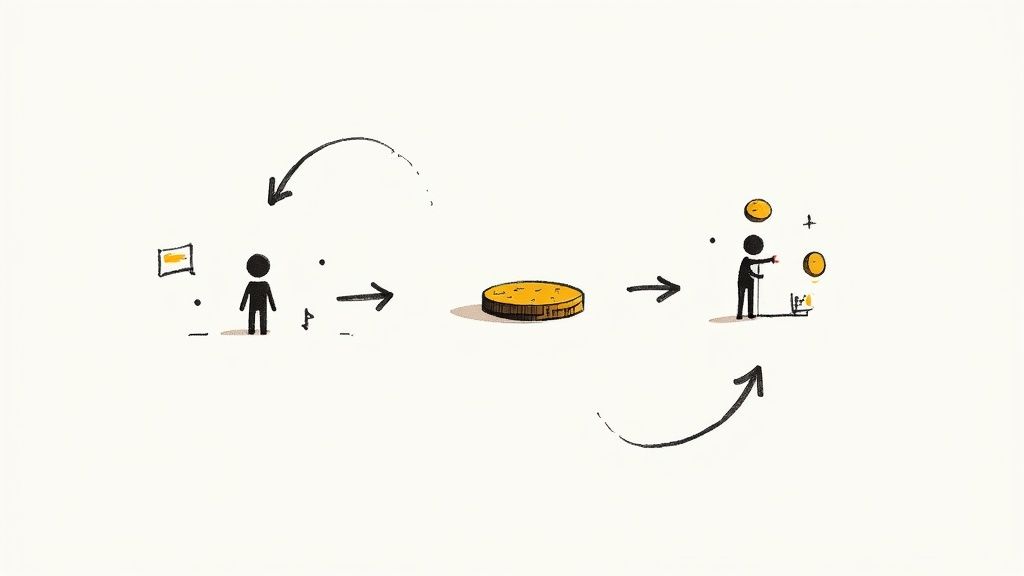
For the ADHD brain, motivation isn't just a "nice-to-have"—it's the fuel that makes the engine run. This is why traditional chore charts so often fall flat. They just don't have the novelty or immediate feedback loop needed to get our reward system to kick into gear. This is where gamification and a smart reward structure can completely change the game, turning mind-numbing tasks into an engaging challenge.
Let's be clear: this isn't about bribery or sticking childish stickers on a chart. It's a strategic way to provide the external motivation needed to clear executive function hurdles like task initiation. You're basically creating a system that delivers a satisfying dopamine hit right when you need it most. By doing this, you're not just acknowledging that your brain works differently—you're giving it the exact support it needs to thrive.
Building Your Reward System
A great way to start is with a simple points system. Go through your chart and assign points to each of your micro-tasks. Maybe wiping the counters is worth 5 points, while taking out the trash is a solid 10. The real key is to make sure the rewards you earn are immediate and genuinely meaningful to you.
To really level this up, try framing those bigger, more daunting projects as "boss battles." For example, cleaning out the entire garage could be a weekend-long boss battle worth 100 points. You can even break it down with smaller "mini-bosses" along the way, like sorting one box at a time. This simple reframe turns a dreaded chore into an achievable, game-like objective.
Your rewards absolutely have to align with what actually motivates you. Create a "reward menu" with options you actually want.
- 15 Points: A 10-minute, guilt-free social media scroll.
- 30 Points: 20 minutes to dive into a favorite hobby.
- 50 Points: Watch one episode of that show you're currently obsessed with.
- 100 Points: Order your favorite takeout for dinner.
The most effective rewards are the ones that deliver immediate gratification. The ADHD brain thrives on quick feedback, so directly linking a completed chore to a desired outcome is what reinforces the positive behavior.
Making Motivation Automatic
Let's be honest, manually tracking points can sometimes feel like just another chore. This is where digital tools like Tracka can shine, automating the whole process. Inside the app, you can log each completed chore as a habit, building up satisfying streaks and earning digital achievements that make consistency feel genuinely rewarding.
These features tap right into the brain's desire for visible progress and recognition. If you're looking for more ways to make daily routines feel less like a grind, our guide can show you how to gamify your life and build momentum that actually lasts. This kind of approach makes habit change feel less like a struggle and more like a game you actually want to win.
Supercharge Your System with Digital Tools
A physical ADHD chore chart on your wall is a brilliant start for visibility. But let’s be real—pairing it with the right digital tools is what creates a truly unstoppable system. This is where you graduate from a static list and build a dynamic routine that actually fits your life, beats forgetfulness, and makes long-term consistency feel like it’s finally within reach.
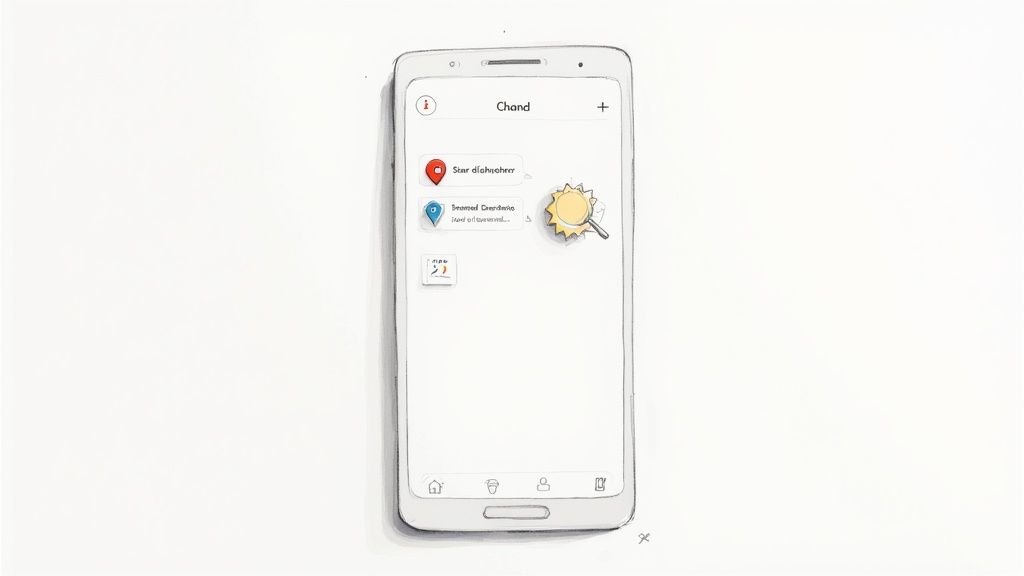
While a whiteboard is great at showing you what to do, a smart app like Tracka excels at reminding you when and how. It’s the bridge between intention and action, which is often the biggest chasm for an ADHD brain to cross. You can set up recurring reminders for daily tasks that aren’t so easily swiped away and ignored.
Imagine setting a location-based reminder in Tracka to 'start the dishwasher' a few minutes after you get home. The notification pops up at the exact moment you're in the right place to act on it, cutting right through that end-of-day brain fog. That’s a level of backup a paper chart just can't provide.
From Static Lists to Smart Insights
The problem with most old-school chore charts is how rigid they feel. They can be overwhelming and totally inflexible, which is a massive turn-off for ADHD brains that run on flexibility and immediate feedback. This isn't just a hunch; the data backs it up.
Research consistently shows that most people struggle with consistency, with distractions and poor habits draining focus. Digital tools can bridge this gap. A 2023 study found that families using digital organization tools reported a 42% decrease in household stress and a 35% improvement in task completion rates. These tools work because they offer the dynamic support that static systems are missing. You can dig deeper into the research behind these findings on attention and organization.
This is where Tracka’s personalized insights become so powerful. The app doesn’t just tally up your checkmarks; it actually learns your patterns. Over time, it can show you things you’d never notice on your own—like the fact you’re most likely to crush household tasks on Tuesday mornings, or that your focus nosedives after 3 PM.
A digital tool isn't a replacement for your visual chart—it's a powerful partner. The chart keeps tasks visible, while the app provides the intelligent reminders, progress tracking, and accountability needed to build true consistency.
Getting that kind of personalized data is a total game-changer. Instead of constantly fighting against your natural energy cycles, you can start working with them. You can schedule the more demanding chores for your peak productivity windows, finally solving the long-term consistency problem that plagues so many of us. Better habits directly link to better life outcomes, like increased energy and reduced stress.
Accountability That Actually Works
Another huge win for a digital system is the built-in accountability. Sure, you can share a physical chart with a partner, but it's a pretty passive setup. With an app like Tracka, its community-driven features let you share progress with a friend or accountability partner, creating a supportive loop of gentle nudges and shared celebration.
This collaborative approach can turn a solo struggle into a genuine team effort. When your partner sees you’ve knocked out your shared chores for the day, it builds positive momentum for everyone. This blend of visual reminders, intelligent tracking, and social support is how you transform a simple ADHD chore chart from a to-do list into a sustainable system for a calmer, more organized life.
How to Troubleshoot Your Chore Chart
Let’s be honest. Even the most brilliant, perfectly color-coded ADHD chore chart has a shelf life. The initial novelty wears off, life throws a curveball, and that system that felt like a lifesaver is suddenly just another piece of wall decor.
This is completely, 100% normal. A brain that thrives on novelty is going to need a refresh every now and then to stay engaged.
When your system stalls out, the answer isn't to scrap it and declare defeat. Think of it like a tool that just needs a quick tune-up. Every setback is just data, showing you what needs to be tweaked to match your current reality—your energy levels, your priorities, your life. It’s a shift from a mindset of failure to one of refinement.
The goal was never perfection; it's about making things functional and sustainable. An ADHD-friendly system isn't a "set it and forget it" solution. It's a living, breathing tool that’s supposed to evolve right along with you.
When You Develop Chore Blindness
One of the most common issues I see is chore blindness. This is when your brain gets so accustomed to seeing the chart in the same spot, day after day, that it literally stops registering its existence. It just fades into the background, becoming as invisible as the light switch next to it. It’s a classic “out of sight, out of mind” problem, even when it’s technically in plain view.
The fix is surprisingly simple: move it.
- Weekly Relocation: Every Sunday, give the chart a new home. One week, it’s on the fridge. The next, it’s taped to the bathroom mirror. The week after that, it’s by the front door where you can't miss it.
- Change the Format: If you're using a whiteboard, try switching to a chaotic-but-effective explosion of colorful sticky notes for a week. The visual jolt is often all it takes to make your brain notice the tasks again.
This constant, minor shift keeps the system from getting stale and prevents your brain from automatically tuning it out. It's a low-effort way to keep your chart visible and effective.
When the List Feels Overwhelming
Some days, even a well-planned chart can feel like a mountain of demands. When you’re low on energy or already drowning in overwhelm, looking at a list of ten chores—no matter how small—can trigger an immediate shutdown. On those days, you need a different strategy entirely.
Your chore chart should serve you, not the other way around. If it’s causing more stress than it’s solving, it’s time to simplify, not force yourself to comply.
This is where you bring in the "Minimum Viable Day" list. This is a bare-bones version of your chart with just 1-3 absolute must-do tasks for that day. It might be as simple as "load the dishwasher" and "take out the trash." That's it.
Completing just those few things keeps you from falling completely off the wagon without draining the little energy you have. This approach gives you permission to not be a productivity machine every single day. That flexibility is what prevents the all-or-nothing thinking that so often leads us to give up entirely. It keeps the momentum alive, even on the days you’re just trying to get by.
Common Questions About ADHD Chore Charts
Even with the best game plan, you're bound to have questions about making a chore chart actually stick. Let's tackle some of the most common ones to clear up any doubts and get you set up for real-world success.
How Often Should I Update The Chart?
The goal is to keep the chart from becoming invisible. For an ADHD brain, anything that stays the same for too long eventually turns into wallpaper. To fight "chore blindness," you should aim to refresh the chart in some small way about weekly.
This doesn't mean you need to reinvent the whole system every Sunday. It could be as simple as switching up the marker colors, rearranging the tasks, or even just moving the chart to a new wall. The idea is to introduce just enough novelty to make your brain notice it again. That tiny, consistent tweak is what keeps the system from fading into the background noise of your home.
What If My Child Or Teen Refuses To Use It?
Ah, the classic standoff. If your kid or teen is pushing back, it's usually because past systems felt like another tool for nagging. The only way around this is collaboration.
Sit down with them and design the thing together. Let them pick the format, the colors, and—most importantly—the rewards. When they have a real say in how it works, it feels less like a list of demands and more like a game they helped create. Frame it as a tool to help them earn what they actually want, whether that’s more screen time or a later curfew, instead of just a list of jobs they're forced to do.
This shared approach can be a game-changer for household harmony. According to the CDC, millions of children globally have an ADHD diagnosis, and research consistently shows they struggle more with completing chores, which can create a ton of family stress. Building the system together is a powerful way to dial down that friction. You can dig into the numbers in the CDC's latest data report.
An effective ADHD chore chart is a living document. It has to bend with your family’s changing needs, energy levels, and priorities. Flexibility isn't a weakness; it's the whole point.
Can Adults Really Benefit From A Chore Chart?
Absolutely. And no, it’s not about treating yourself like a kid. For an adult with ADHD, a chore chart is a strategic tool for outsourcing your executive functions. It pulls all those to-dos out of your head and puts them somewhere you can actually see them, which dramatically lowers the mental energy you spend just trying to remember everything.
It’s also a powerful way to break down the "wall of awful"—that paralyzing feeling that makes even starting a task feel impossible. By turning a mountain of a chore like "clean the kitchen" into small, checkable steps, you give your brain the structure and quick wins it needs to get moving and stay motivated. It’s not about control; it’s about clarity.
Ready to pair your visual chart with a digital sidekick that builds real consistency? Tracka helps you log your wins, get smart AI insights into your most productive patterns, and stay accountable without the pressure. Stop fighting your brain and start working with it. Download Tracka and build your system today.


